language
  Español

Ask a field service engineer what usually fails on an equipment enclosure, and the answer will rarely be the electronics. More often it is the door hardware: a compression latch that has lost its tension, a cylinder lock corroded by humidity, a handle that no longer returns to position after years of heavy use. Cabinet locks sit at the intersection of security, sealing, and ergonomics, yet they are still treated as a minor line item on the bill of materials.
The conclusion first: the right cabinet lock is chosen in three steps — select the operating mechanism, match the material and finish to the environment, and verify the mechanical ratings against your door panel thickness, rotation requirement, and opening frequency. When these three decisions are made together, most field failures disappear.
One clarification before going further. Many search results for cabinet locks are child-safety latches for kitchen cabinets, tested to withstand pulling and shaking from toddlers. Those products serve a real need, but they are not what an equipment manufacturer is looking for. This article covers cabinet locks as engineered components for industrial enclosures, electrical panels, telecom cabinets, machine tools, and similar equipment, where the lock must perform reliably for years under repeated operation, vibration, temperature swings, and often moisture.
What an Industrial Cabinet Lock Has to Do Differently
A consumer cabinet lock only has to keep a door shut. An industrial cabinet lock has to do much more. It must hold a door closed against gasket compression so the enclosure maintains its ingress protection rating. It must resist vibration during machine operation and transport. It must survive frequent opening without developing visible play. And it must allow operators to identify the correct key or tool quickly, even in poor lighting or with gloved hands.
This is why industrial lock ranges contain dozens of variants of what appears to be the same lock. The same basic lock body can be offered with different cylinders, adjustable or fixed compression, left- or right-handed mechanisms, different surface finishes, and different materials. Understanding which variant fits your application is the real skill in cabinet lock selection.
Types of Cabinet Locks by Operating Mechanism
The operating mechanism determines how the door opens, how the latch engages, and how much security the lock provides. Four types cover the majority of industrial cabinet applications.
Compression Latch Locks
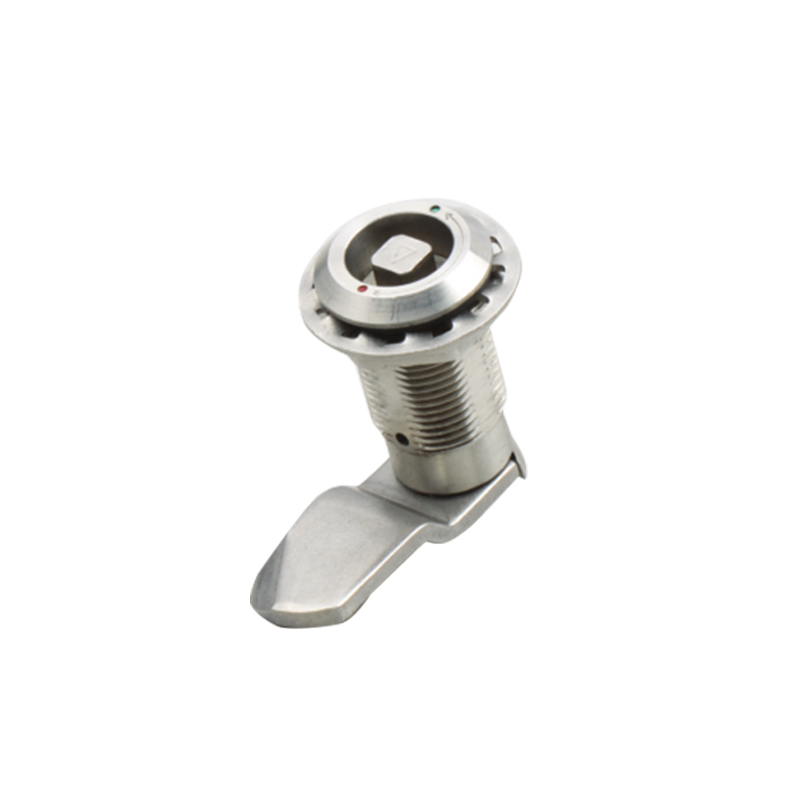
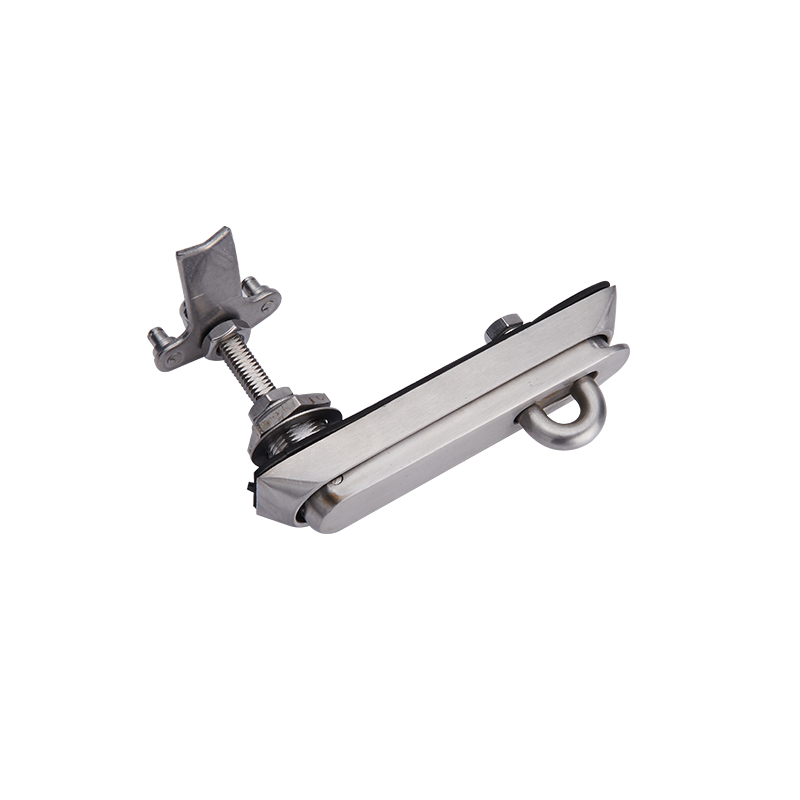
Compression latches are the default for panel doors that need an even seal. Instead of a simple cam, the mechanism moves the bolt forward as the handle turns, pulling the door tightly against the frame or gasket. That makes them the right choice for cabinets with rubber seals, such as electrical enclosures and weather-protected boxes. Adjustable versions suit doors where panel thickness varies from unit to unit; fixed versions are simpler and lower in cost. On the same basic body, manufacturers offer different cylinders: a keyed lock cylinder, a waterproof cylinder for outdoor exposure, or a tool-type cylinder such as hexagon 8 mm where a master tool is preferred.
A good starting point is a compression latch lock with a lock cylinder and adjustable compression, which covers most common panel thickness ranges. If you need to compare variants side by side, the compression latch lock range is organized by cylinder type, adjustability, and base material.
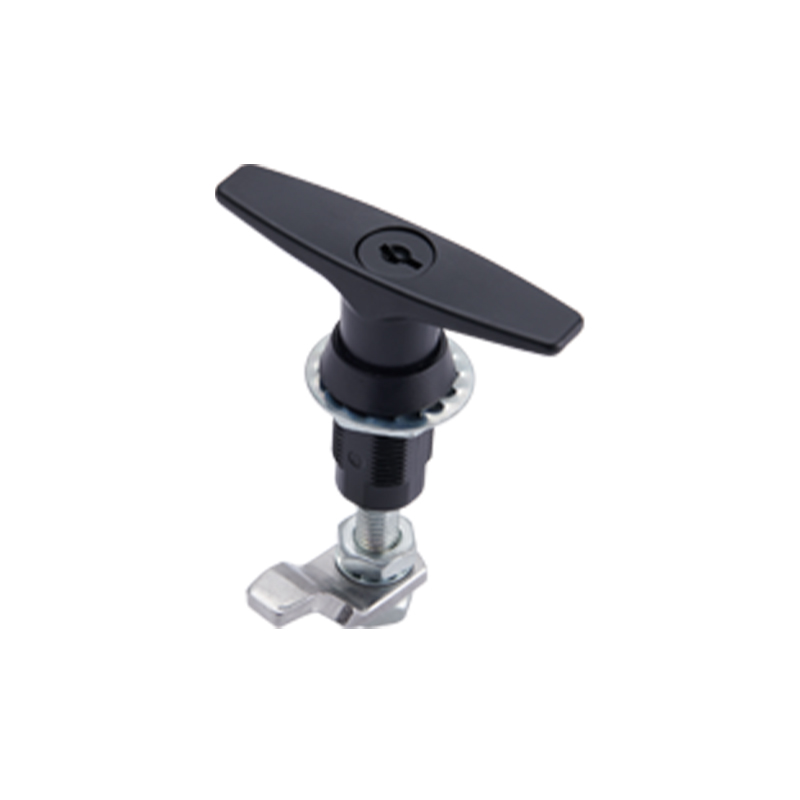 Wholesale MS309-3B-1 Compression Latch Locks With Lock Cylinder, Adjustable FactNingbo Oubao Technology Co., Ltd is top China wholesale MS309-3B-1 Compression Latch Locks With Lock Cylinder, Adjustable suppliers and f...View Product →
Cylinder Locks
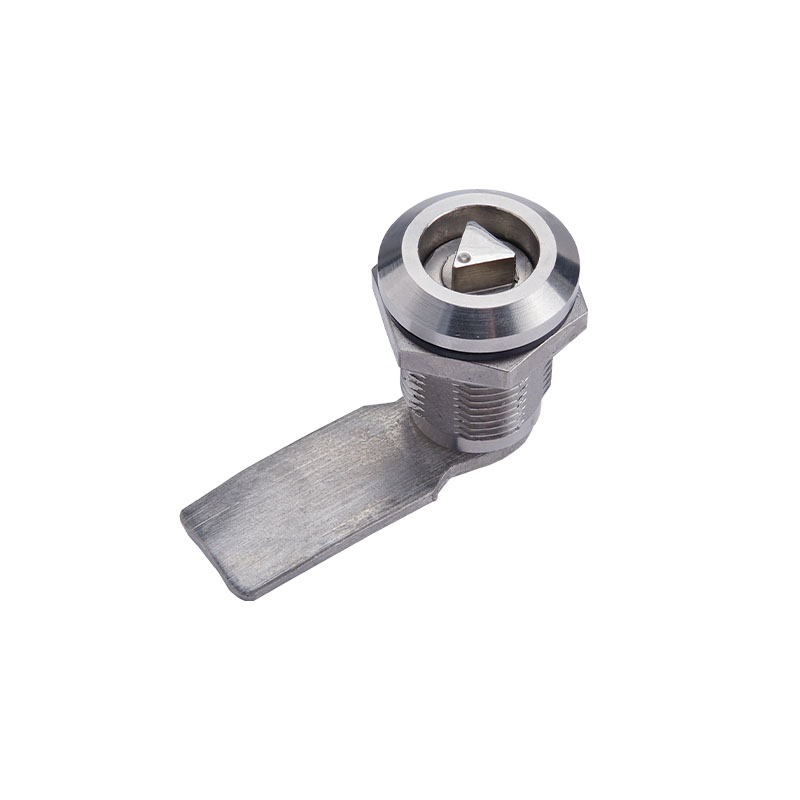
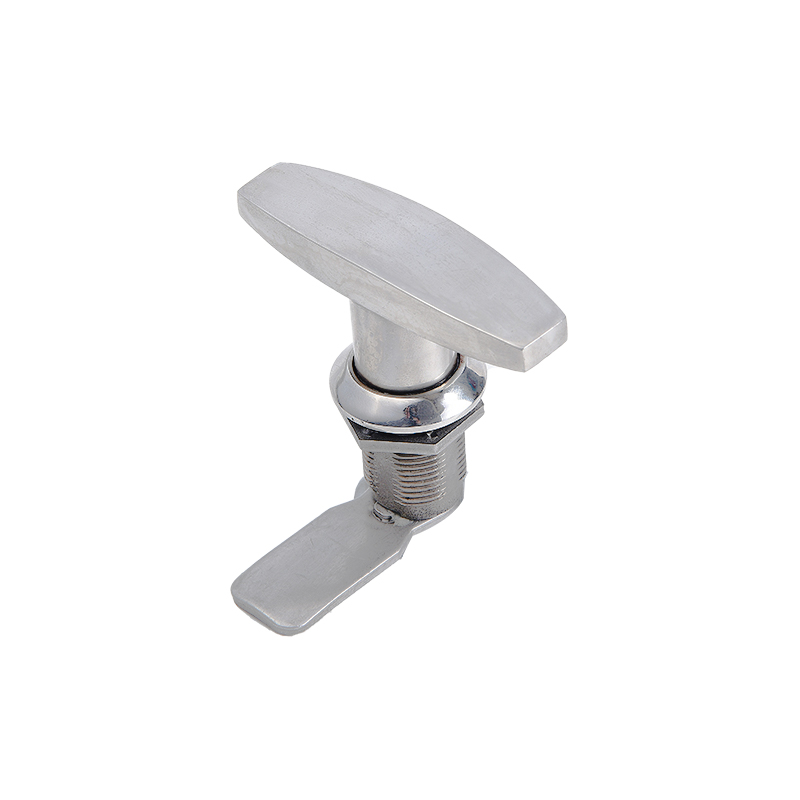
Cylinder locks are the workhorse for compact doors and instrument cabinets. The lock body is short, the rotation is normally 90°, and the bolt or cam engages a strike on the frame. They are simple, inexpensive, and available in a wide range of key types: cam keys, triangle 8 mm, square 8 mm, groove keys, and blade-type keys. For outdoor and washdown areas, specify a stainless steel body rather than a zinc alloy base with plating.
A model worth special attention in this category is the SUS304 stainless steel cylinder lock, which resists corrosion without adding unnecessary weight. When the project calls for key control on a compact door, it helps to review cabinet cylindric lock types and their uses before fixing the cylinder specification.
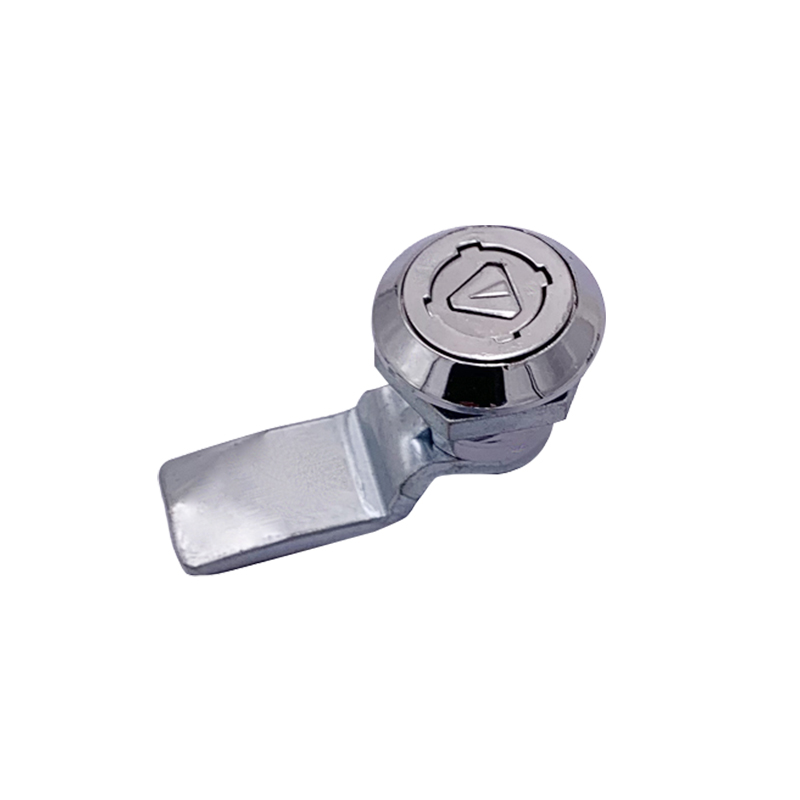 Wholesale MS705-3B-3S SUS304 Stainless Steel Industrial Locks Factory, SuppliersNingbo Oubao Technology Co., Ltd is top China wholesale MS705-3B-3S SUS304 Stainless Steel Industrial Locks suppliers and factory,Materia...View Product →
Handle Locks and Panel Locks
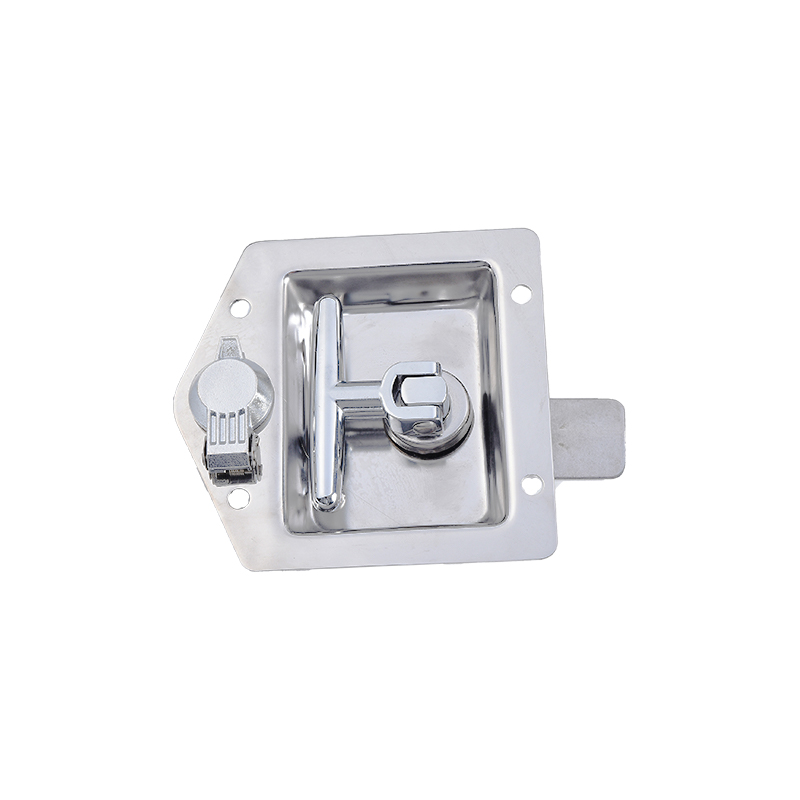
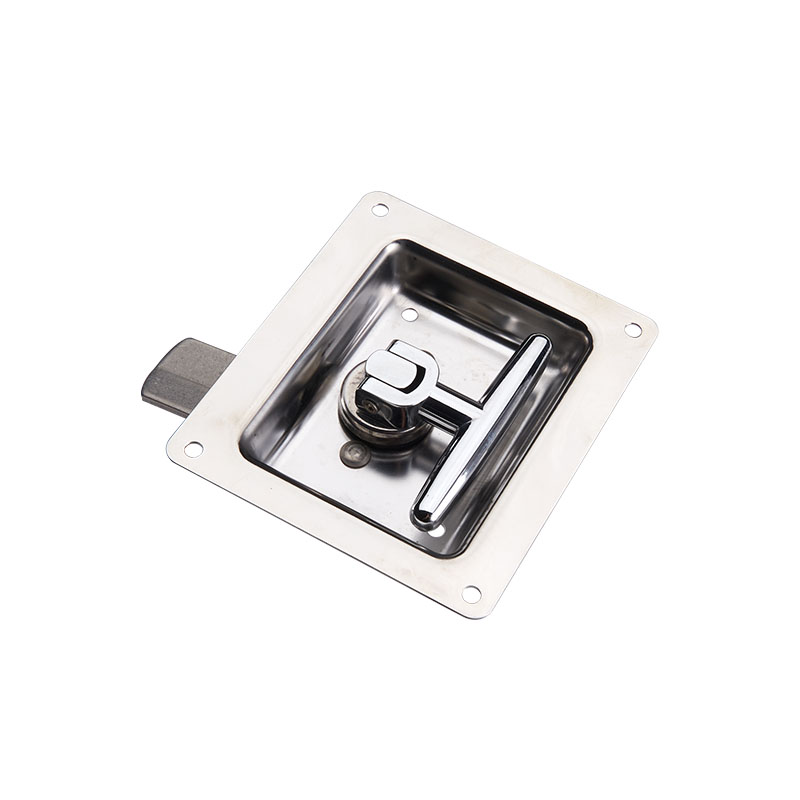
When a door is opened many times a day, a handle lock gives the operator something to grip. Handle locks combine a handle with a locking insert and can be designed for left- or right-hand doors, with padlock capability for added security. Panel locks are the flush alternative for sheet metal doors where a protruding handle is not acceptable. Impact-type panel locks, which release with a strike from a palm or fist, are common on light industrial cabinets where speed of access matters more than key security.
Connecting Rod Locks
Tall or wide doors tend to flex in the middle, and a single latch is then not enough. Connecting rod locks drive steel bolts at the top and bottom of the door through a linkage or rack mechanism. Three-point locking distributes the clamping force and keeps the door flat against the frame. This construction is typical for switchgear, distribution cabinets, and large machine access panels. Rod locks require matching rod lengths and bolt positions, so it is wise to choose hardware from the same series to keep installation straightforward.
Match the Lock Body to the Environment
The mechanism decides how the lock works; the material decides how long it works. The most common mistake is to select a lock only by price and finish, then discover corrosion or coating wear in the first season. For industrial cabinet locks, the material choice should follow the installation environment rather than the lock shape.
| Material | Typical applications | Advantages | Points to check |
|---|---|---|---|
| Zinc alloy with chrome, black spray, or white zinc plating | Indoor panels, switch cabinets, machines | Precise die-casting, wide range of finishes, good value | Coating quality matters; avoid in aggressive outdoor or coastal use |
| SUS304 stainless steel | Outdoor telecom, washdown, and coastal installations | Corrosion resistance, long-term appearance, low maintenance | Confirm the entire body is stainless, not only the face plate |
| SUS316 stainless steel | Marine and chemical environments | Highest resistance to pitting and chemical attack | Premium cost; request material certification when required |
| Carbon steel with plating | Economy indoor enclosures | Strong and cost-effective | Plating can scratch; not for outdoor exposure |
| PA (nylon) or POM | Handles, covers, dust guards, rollers | Lightweight, corrosion-free, good UV behavior | Lower load capacity; use metal inserts where necessary |
For outdoor cabinets, stainless steel lock bodies with sealing rings or dust covers give the longest useful life. For indoor and inland sites, coated zinc alloy remains the industry standard and offers the widest set of finish options.
Mechanical Data to Verify Before Buying
Every lock series publishes mechanical limits, but these numbers are often ignored until a problem appears on site. A few minutes of checking prevents the most common field complaint: a lock that moves smoothly on the bench but binds on the real door.
- Rotation angle: most cylinder locks operate with a 90° quarter-turn; some handle locks rotate 120° or 180°. Confirm the direction matches your door strike.
- Maximum static load: models are rated at values such as 270 N, 580 N, or 970 N. This matters when a door receives pushing force, stacking, or vibration during transport.
- Torque limits: fixing nuts and knobs have rated tightening torques, and some cylinders specify a maximum input torque of 9 N·m. Over-tightening distorts the housing and jams the mechanism.
- Door panel thickness: compression latches and cassette hinges each have an applicable thickness range. Selecting outside the range gives you a loose fit or an installation that cannot be completed.
- Key and tool type: triangle 8 mm, square 8 mm, cam key, or dedicated tool key. Choose a type that your maintenance team can manage without being widely available outside the facility.
Mechanical or Electronic? Two Valid Routes
When Mechanical Cabinet Locks Make Sense
Mechanical locks remain the backbone of industrial enclosure hardware. They need no wiring, no battery, and their failure mode is predictable: a worn cam, a broken key, or a seized cylinder. If the cabinet is opened by a small group at low frequency, there is no strong reason to move away from a mechanical lock. The key decision here is the cylinder type and whether tool-free operation adds enough value to your workflow.
When Electronic Cabinet Locks Earn Their Cost
Electronic locks become worth the investment when access must be logged, keys are constantly lost or copied, or contractors need temporary access to the cabinet. They divide into two families. Active electronic locks are powered and support APP unlocking, remote wireless unlocking, and WeChat temporary authorization, which is useful for monitoring multiple cabinets from one location. Passive electronic locks need no cabinet-side wiring; they are energized by an electronic key, making them practical for retrofitting existing enclosures without pulling cables.
A representative example is the passive electronic lock with electronic key unlocking, which combines the lower installation complexity of a mechanical lock with the audit trail of an electronic system. For a complete picture of both families, the full electronic lock category explains the differences between active and passive configurations in more detail.
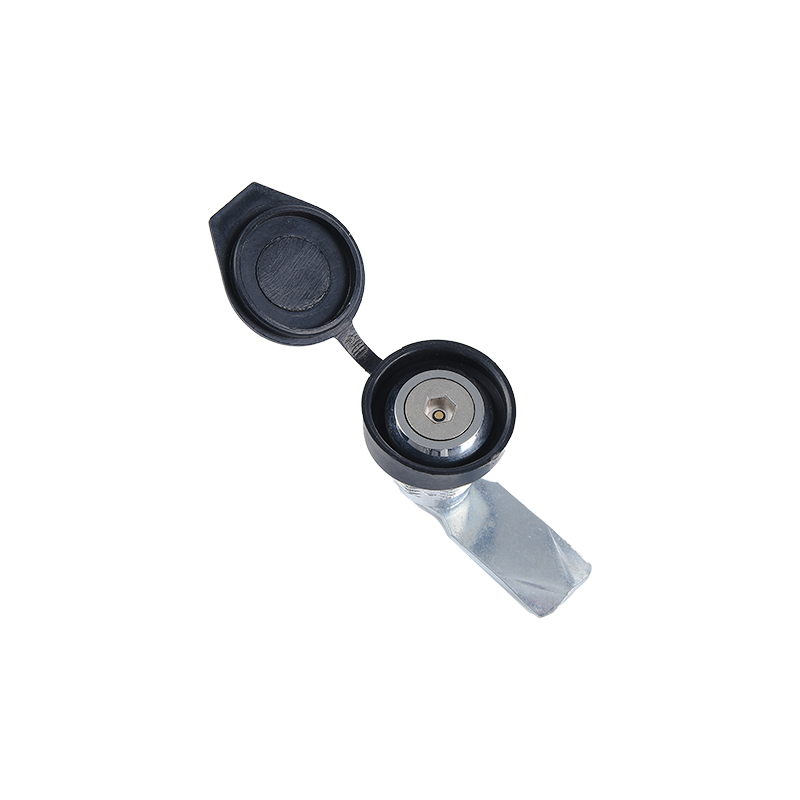 Wholesale DS705-2M Passive Electronic Locks With Electronic Key UnLock Factory, Ningbo Oubao Technology Co., Ltd is top China wholesale DS705-2M Passive Electronic Locks With Electronic Key UnLock suppliers and factory,View Product →
Don't Forget the Hardware Around the Lock
A cabinet door is a system, and the lock is only the most visible part. Built-in hinges, cassette hinges, and exterior hinges determine how the door aligns, and a door that sags will eventually make any lock hard to operate. Damping hinges control closing speed; folding supports hold the door at the required opening position. Steel bolts, connecting rods, tool keys, and waterproof covers are the small parts that make a specific lock work in its enclosure. When lock and hardware are specified from the same system, drilling templates, rod lengths, and mounting dimensions stay consistent through production.
A Short Pre-Purchase Checklist
Before you write the cabinet lock into the material list, run through six checks:
- Define how the door is operated — frequency, direction, and whether operators need a physical key.
- Choose the mechanism type: compression, cylinder, handle, panel, or connecting rod.
- Match the material and finish to the installation environment, not to the appearance.
- Verify rotation angle, static load, tightening torque, and door panel thickness.
- Decide between mechanical and electronic based on access management needs.
- Order hinges, rods, keys, and covers from the same system to avoid mismatches.
Cabinet locks get little attention until they fail, and by then the cabinet has already suffered downtime or a security incident. A lock that matches its mechanism, material, and ratings will run for years without attention. That is the difference between a part that fills a hole in the enclosure and an engineered locking solution.