language
  Español
Industrial cabinet locks may be small components, but they carry a large share of responsibility in any enclosure-based system. A lock that fails in the field can mean unplanned downtime, compromised equipment, or even a safety incident. For design engineers, procurement professionals, and maintenance teams, understanding the available options is the first step toward making the right decision. This guide explores the main types of industrial cabinet locks, the materials used to build them, and the criteria that matter when choosing a locking solution for demanding environments.
What Are Industrial Cabinet Locks?
Industrial cabinet locks are mechanical or electronic locking devices designed for cabinet enclosures used in industrial, commercial, and infrastructure settings. Unlike residential or consumer locks, these units are engineered for repeated operation, harsh environments, and specific mounting and safety requirements. They serve several functions at once: securing the contents of the enclosure, controlling access, and providing a visible indication that the door is properly closed.
Typical applications include:
- Electrical switchgear and control cabinets
- Telecommunication and network enclosures
- Instrumentation and metering panels
- Industrial machinery and equipment guarding
- HVAC and outdoor field housings
- Mobile equipment and vehicle compartments
Main Types of Industrial Cabinet Locks
Selecting the right lock begins with understanding the common construction families. Each type offers a different balance of security, sealing performance, ease of operation, and installation effort.
Compression Latch Locks
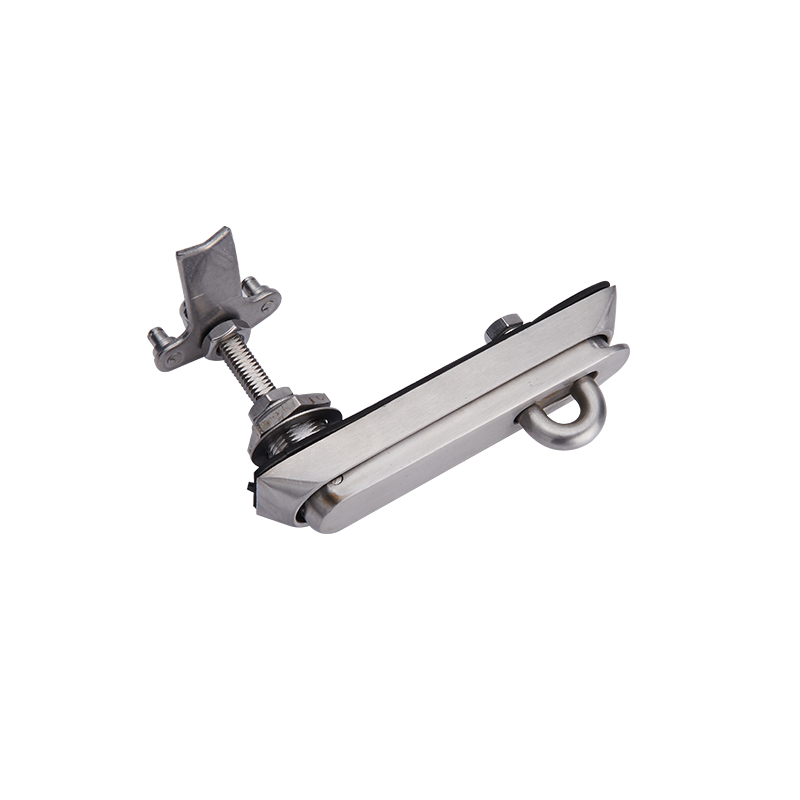
Compression latch locks pull the door tightly against a gasket or seal. When the handle is turned, the latch compresses the seal to create a dependable barrier against dust, moisture, and water intrusion. These locks are widely used on electrical enclosures and outdoor cabinets where weather resistance is a priority. Many compression models are offered with or without lock cylinders, with adjustable or fixed grip ranges, and with different handle styles to suit the application.
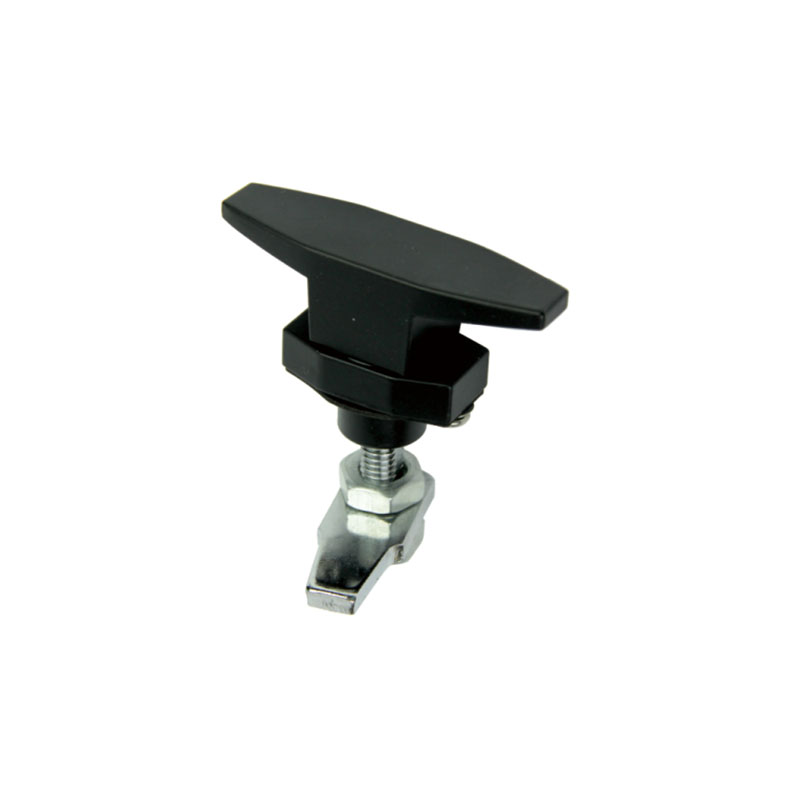 MS309-2 Zinc Alloy Compression Cabinet Lock with Adjustable StopThis compression lock pulls the door tightly against a gasket for dust and moisture resistance, and its adjustable stop height suits electrical enclosures and outdoor cabinets needing dependable sealing.View Product →
Cylinder Locks
Cylinder locks are among the most established industrial locking mechanisms. A key rotates the cylinder, which moves a cam or bolt to secure the door. They are compact, simple to install, and available with a wide range of key profiles, including triangle keys, square keys, and blade cylinders. This makes them suitable for control panels, junction boxes, and any enclosure where a slim, dependable keyed lock is needed. For a closer look at available configurations, see our overview of cabinet cylinder lock types and uses.
Handle Locks
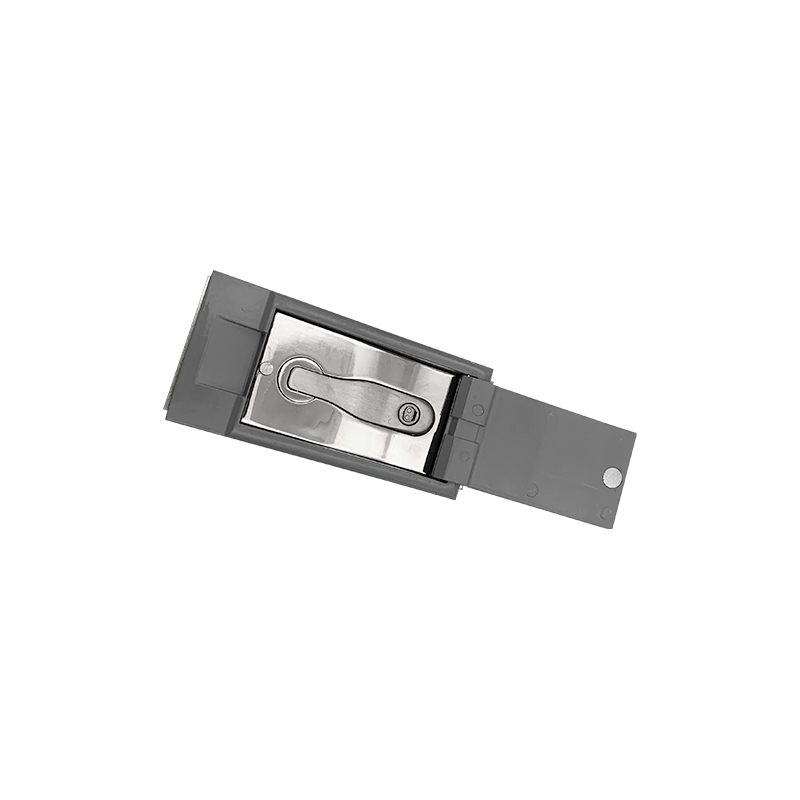
Handle locks combine a door handle with an integrated locking mechanism. They convert rotary motion into a secure closure and are often specified for heavier doors where a larger grip is needed. Many models rotate 90 degrees to open or lock, and options include padlock provisions, left- or right-hand mounting, and interchangeable inserts for different access levels.
Panel Locks and Flat Door Locks
Panel locks and flat door locks are designed for enclosures with thin door panels and limited mounting depth. Their low-profile construction sits flush with the door, reducing the chance of accidental snagging and keeping the cabinet appearance clean. They are commonly specified for control panels, junction boxes, and instrumentation enclosures where space is tight.
Connecting Rod Locks
For larger cabinets, a single latch point often does not provide enough security or seal pressure. Connecting rod locks use steel rods to transmit locking force to multiple points along the door edge. Many heavy-duty models provide three-point locking, with bolts engaging at the top, center, and bottom of the frame. This is a popular choice for telecom cabinets, server racks, and large electrical enclosures that need a stiff closure and even gasket compression.
Electronic Locks
Electronic locks add an access-control layer to the enclosure. Instead of a conventional key, they accept electronic keys, PIN codes, QR codes, or wireless commands. Active electronic locks draw power from the enclosure and can support remote unlocking and audit trails. Passive electronic locks operate without an external power supply, making them attractive for outdoor and retrofit installations where running power to the door is impractical.
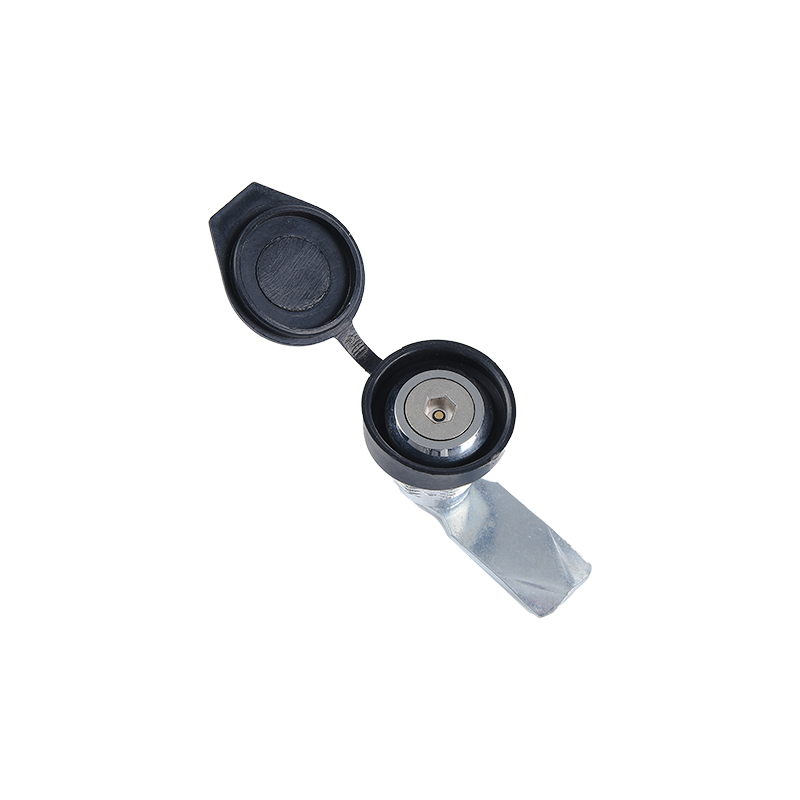 DS705-2M Passive Electronic Lock with Electronic Key UnlockThis passive electronic lock needs no external power, making it practical for outdoor and retrofit enclosures. It adds key-based access control where running power to the door is inconvenient.View Product →
Stainless Steel vs. Zinc Alloy: Choosing the Right Material
The material of an industrial cabinet lock affects corrosion resistance, mechanical strength, and long-term appearance. Zinc alloy is a common choice for interior and general-purpose locks because it can be cast into complex forms, plated in many finishes, and manufactured at a competitive cost. Stainless steel, by contrast, is preferred in coastal, chemical, food-processing, and other corrosive environments. Industrial stainless steel locks are typically made from SUS304 or SUS316 and offer superior resistance to rust and chemical attack.
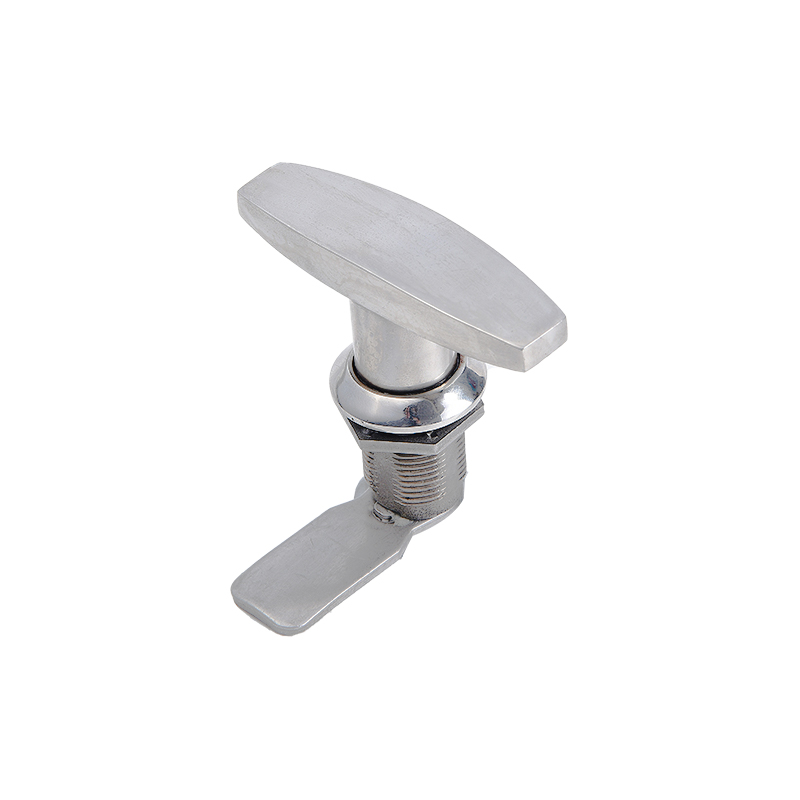
For applications that demand maximum durability, an all-stainless-steel construction is often the safer specification. An all-stainless-steel cabinet lock maintains its mechanical function and appearance even after years of exposure to humidity, temperature swings, and aggressive cleaning agents.
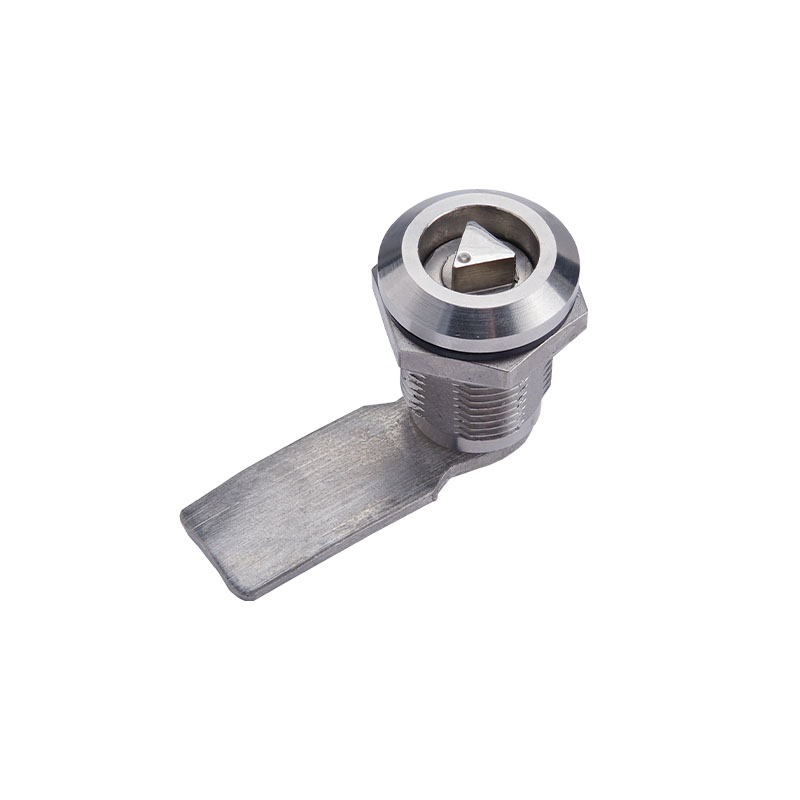 MS705-2MS-3 All Stainless Steel Industrial Cabinet LockBuilt entirely from stainless steel with brushed and polished surfaces, this lock withstands humidity, temperature swings, and aggressive cleaning, making it a durable choice for demanding environments.View Product →
Key Selection Criteria for Industrial Cabinet Locks
Several factors should be evaluated when comparing industrial cabinet lock options:
- Security requirements: keyed, tool-operated, padlockable, or electronic
- Operating environment: indoor, outdoor, washdown, coastal, or chemically aggressive
- Door thickness and panel material
- Frequency of operation and expected service life
- Installation method and available tooling
- Compliance and certification requirements
The table below summarizes the main lock families discussed in this guide.
| Lock Family | Typical Application | Security Level | Common Materials |
|---|---|---|---|
| Compression Latch | Sealed outdoor enclosures | Moderate | Zinc alloy, stainless steel |
| Cylinder Lock | General-purpose cabinets | Moderate to high | Brass, zinc alloy, stainless steel |
| Handle Lock | Heavy doors, machinery | Moderate to high | Zinc alloy, stainless steel |
| Connecting Rod Lock | Tall cabinets, multi-point sealing | High | Galvanized steel, zinc alloy |
| Electronic Lock | Access control and audit | High | Zinc alloy, stainless steel |
Industrial Cabinet Locks Across Industries
The same cabinet lock technology appears in many sectors, each with its own priorities. Electrical equipment manufacturers fit compression and handle locks to switchgear cabinets where sealing and security go hand in hand. Communication companies use connecting rod and electronic locks on outdoor network enclosures to prevent unauthorized access while keeping maintenance visits efficient. Machine builders specify handle locks with padlock capability to support lockout/tagout procedures. In transportation and marine applications, stainless steel locks and hinges withstand vibration, salt spray, and temperature extremes. Each industry tends to emphasize a different combination of security, weather resistance, and ease of service, which is why a broad product range matters.
Why Manufacturer Experience Matters
An industrial cabinet lock is only as reliable as the design and production process behind it. Dimensional consistency, plating quality, and cylinder durability all depend on a manufacturer's engineering and quality control. When you work with a manufacturer that specializes in industrial locks, you benefit from attention to details such as key tolerance, handle rotation, and installation fit.
Ningbo Oubao Technology is an industrial lock manufacturer focused on the development and production of cabinet locking hardware. Our product range covers mechanical locks, electronic locks, hinges, handles, folding supports, and lock accessories for switchgear, communications, machinery, and other industrial sectors. We support OEM and ODM projects with in-house design, testing, and a commitment to consistent quality.
Final Thoughts
Selecting the right industrial cabinet lock comes down to matching the locking mechanism, material, and access method to the specific demands of the enclosure and its operating environment. By understanding the product families and evaluation criteria described in this guide, you can make a more informed specification and build equipment that performs reliably over the long term. If you need assistance narrowing down the options for your next project, our team is ready to review your application and recommend a suitable configuration.