Door Lock Standards Explained: Grades, IP Ratings & Industrial Enclosure Tests Wholesale

Home / News / Industry News / Door Lock Standards Explained: Grades, IP Ratings & Industrial Enclosure Tests

Door Lock Standards Explained: Grades, IP Ratings & Industrial Enclosure Tests

Two cabinet doors can look identical and still be governed by completely different door lock standards. One is a light latch on an office cupboard; the other is a component inside a switchgear assembly that has to keep dust and water away from a 630 A busbar chamber for the next fifteen years. Knowing which standard applies, and what it actually measures, is the quickest way to avoid paying for the wrong lock.

We manufacture industrial locks, hinges and handles for cabinets, machinery and rail applications, and we spend a lot of time reading standards alongside customers. This guide covers the standards you will realistically meet on a datasheet or in a tender: what they test, where the grades come from, and how to verify a supplier's claim instead of trusting a label.

What "Door Lock Standards" Really Refer To

Standards in this field fall into three groups that are frequently mixed up in conversation.

  • Product performance standards describe the lock itself: durability cycles, strength, corrosion resistance and security. Examples include ANSI/BHMA A156.2, A156.13 and EN 12209.
  • Environmental and enclosure standards describe the space the lock protects: IP ratings, NEMA enclosure types, IK impact resistance, and assembly-level rules such as IEC 61439.
  • Code and life-safety requirements describe behaviour in an emergency: fire door assemblies, single-motion egress and panic hardware.

A lock can satisfy one group and fail another. A cylinder may be beautifully corrosion-resistant and still be the wrong choice for a fire door, and a heavy-duty latch rated for 800,000 cycles can be useless outdoors if its gasket disappears after a season of washdowns. Sorting your requirement into the right group before you start comparing products saves a great deal of time.

The Main Standards at a Glance

The table groups the standards most often cited for door locks and industrial cabinets by region and by what they principally measure.
Standard Region What it principally covers
ANSI/BHMA A156.2 North America Bored and cylindrical locksets; Grade 1 to Grade 3 durability, strength and finish
ANSI/BHMA A156.13 North America Mortise locks and latches; Grade 1 to Grade 3
ANSI/BHMA A156.5 North America Cylinders, keys and key control systems
UL 10C and NFPA 80 North America Fire door assemblies, including latch and bolt behaviour under fire test conditions
EN 12209 Europe Mechanically operated locks and latches; a coded classification covering use, durability, door mass, fire, corrosion and security
EN 1303 Europe Cylinders: key-related security, attack resistance, durability and corrosion
IEC 60529 International IP ratings for enclosures, including the first and second characteristic digits
NEMA 250 North America Enclosure types such as 1, 12, 3R, 4 and 4X, adding corrosion and washdown criteria
IEC 62262 International IK impact resistance of enclosures
IEC 61439 International Low-voltage switchgear and controlgear assemblies, including the degree of protection of the finished cabinet
EN 14846 Europe Electromechanically operated locks and striking plates
UL 294 North America Access control system units, including electronic locking hardware

Grades, Cycle Counts and Load Ratings

North American grading is the easiest to follow. A Grade 1 cylindrical lock under A156.2 is tested to 800,000 operating cycles, Grade 2 to 400,000 and Grade 3 to 200,000, before torque and abuse testing are applied on top. A156.13 applies the same logic to mortise hardware with higher counts at each level.

European classification works differently. Rather than one headline grade, EN 12209 and EN 1303 print a string of digits and letters, and each position describes one property: category of use, durability, door mass, fire behaviour, safety, corrosion resistance, security. "Meets EN 12209" on its own says almost nothing until you see the whole string.

Industrial cabinet locks are rarely certified to A156.2, and most of them do not need to be. What matters instead is the published mechanical data. A datasheet that states a 360 N static load, a 90-degree rotation and a stainless steel body tells you more about a hinge-side cabinet lock than any "heavy duty" badge.
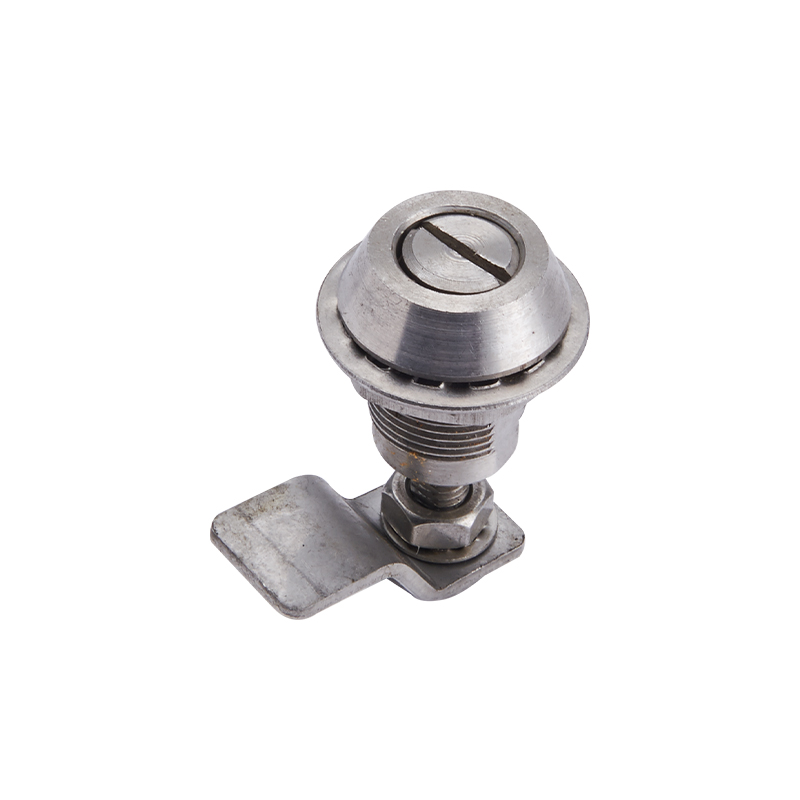
MS816-3S-4S Stainless Steel Industrial Cabinet LockMS816-3S-4S Stainless Steel Industrial Cabinet LockStainless steel cabinet lock with 90° bolt rotation and 360 N static load rating for industrial enclosure locking.View Product →

Read those numbers with the application in mind. A 270 N rating is comfortable for a 400 mm instrument panel door, but put the same lock on a 1.2 m door in a windy outdoor yard and it will be worked far harder, because leverage grows with door width. Cycle ratings also assume the door stays aligned; misalignment between hinges and latch is the most common cause of premature lock failure we see in the field.

Environmental Ratings: IP, NEMA, IK and Corrosion

An IP code carries two digits. The first describes protection against solid objects and dust, from 0 to 6; the second describes protection against water, from 0 to 8. IP54 means dust protected and splash resistant, IP66 means dust tight and protected against powerful jets, and IP67 adds temporary immersion. NEMA 250 covers similar ground but folds in corrosion resistance, and Type 4X adds washdown and non-metallic or corrosion-resistant construction requirements.

Here is the part that catches people out: IP and NEMA ratings are established on the assembled enclosure, not on the lock by itself. A latch tested to IP66 contributes nothing if the cabinet gasket is compressed flat, the mounting holes are oversized, or the door has warped. Lock supplier and cabinet builder have to agree on who tests what, and on which surface finishes and gasket materials are being assumed.

Corrosion is usually quoted as salt spray hours to ASTM B117 or ISO 9227. A zinc alloy body with a bright chrome finish may be fine indoors, while SUS304 or SUS316 makes more sense for coastal, rail and food plant installations. The same distinction applies to hinges, where a stainless pin and a plated carbon steel leaf can behave very differently after two years outdoors. If you are specifying for exposed locations, our note on stainless steel locks for outdoor cabinets goes into the material trade-offs in more detail.

MS708-3C Waterproof Compression Latch Lock CylinderMS708-3C Waterproof Compression Latch Lock CylinderZinc alloy compression latch with waterproof lock cylinder, adjustable screw and 200 N static load for cabinet locking.View Product →

Fire Doors, Egress and Life Safety

Once a door belongs to a fire assembly, the lock becomes a life-safety component rather than a convenience. UL 10C and NFPA 80 in North America, and the EN 1634 series in Europe, test the complete assembly, and the latch or bolt has to stay engaged through the fire exposure and hose stream test. Hardware on an egress route must allow single-motion exit, which is why padlocks and auxiliary deadbolts that trap occupants are prohibited. EN 179 and EN 1125 cover emergency and panic exit devices in Europe.

Industrial cabinets have a related concern rather than an identical one. Switchgear and control panel doors must open fully and stay open during maintenance, so hinges, folding supports and hold-open hardware carry as much risk as the lock. A door that drops or swings shut on an operator is a safety issue long before it becomes a warranty conversation.

Electronic Locks Bring Their Own Standards

Electronic and smart locking adds a second layer of requirements. EN 14846 governs electromechanically operated locks and striking plates, UL 294 covers access control system units in North America, and IEC 60839-11-1 addresses electronic access control systems internationally. These standards look at behaviour when power fails, whether a mechanical override exists, whether the device fails safe or fail secure, and increasingly at firmware and data handling.

Fail safe means the door releases when power is lost, which is correct on an escape route and wrong on a cash drawer. Fail secure does the opposite. Getting that decision right matters more than the certification logo on the box.

For many industrial applications, the requirement is simpler than a networked system suggests: a credential that cannot be copied casually, plus a physical key that still works when the battery is flat. That is the space our passive electronic locks occupy, and it is usually specified by function rather than by certification.
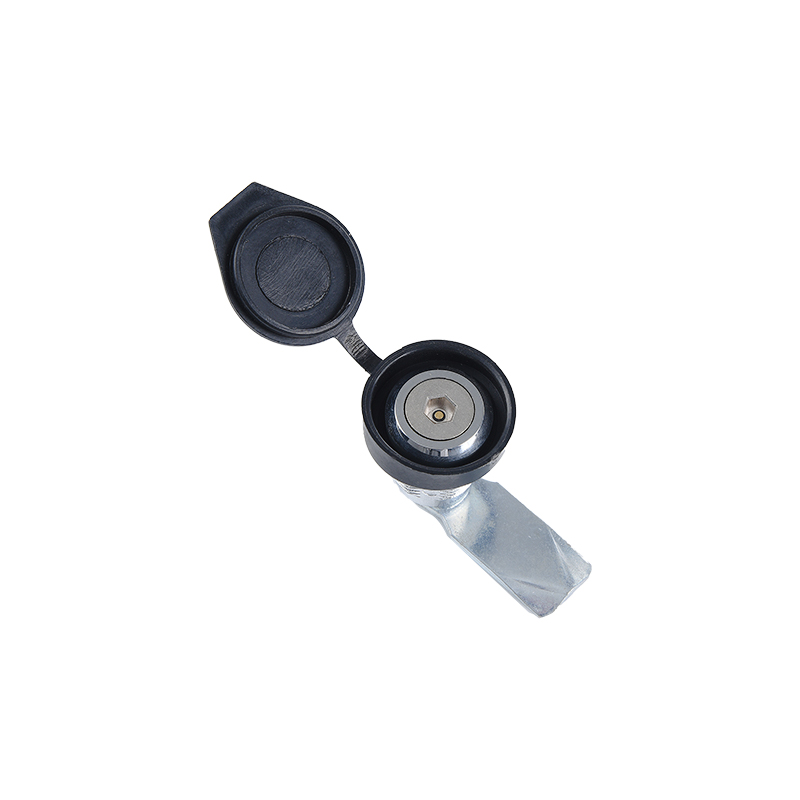
DS705-2M Passive Electronic Lock with Electronic KeyDS705-2M Passive Electronic Lock with Electronic KeyPassive electronic lock with electronic key unlocking, 90° rotation, 270 N static load and a 200,000-cycle operating life.View Product →

Standards Inside Industrial Cabinets and Switchgear

IEC 61439 is the one lock buyers most often overlook. It governs low-voltage switchgear and controlgear assemblies and holds the cabinet builder responsible for the finished assembly's insulation, temperature rise, short-circuit withstand and degree of protection. The lock, hinge and gasket all sit inside that envelope. A latch that deforms when a heavy door slams, or a stiff mechanism that encourages operators to force the door, can push an assembly out of compliance during routine maintenance. UL 508A plays a similar role for industrial control panels in North America.

Keying conventions deserve a mention too. The 8 mm triangular and 7.7 or 8.8 mm square keys used across utility, telecom and rail cabinets are not defined by a single global standard, but they are firmly established practices within those industries. Supplying a compatible tool key is often more important to a maintenance team than any test certificate.

How to Verify a Standards Claim

Claims are easy to print and harder to prove. These questions separate the two.

  1. Ask for the standard number and edition, not the word "certified".
  2. Request the full test report rather than a certificate cover page, and check the laboratory, the sample description and the test date.
  3. Confirm the corrosion method and duration: ASTM B117 and ISO 9227 are related but not identical, and 96 hours is a very different claim from 720 hours.
  4. Check the cycle test conditions: what torque was applied, what door mass was used, and whether the sample was realigned mid-test.
  5. Ask which grade or classification string within the standard is being offered.
  6. For enclosure ratings, ask who tested the assembly, because the component test alone does not transfer.

A Short Specification Checklist

  • Environment: indoor, outdoor, washdown or coastal, which sets IP or NEMA class and body material.
  • Door size and mass: drives static load, hinge class and the need for a folding support.
  • Opening frequency: drives cycle rating and lubrication strategy.
  • Security level: cylinder grade, key control and whether a padlock provision is required.
  • Fire or egress obligation: listed hardware and single-motion exit only.
  • Electronic function: fail safe or fail secure, credential type and mechanical override.
  • Maintenance reality: can the lock be serviced or replaced without dismantling the door?

Most difficult projects simply overlap several of these documents at once, for example an outdoor rail cabinet with an electronic credential and a fire-rated partition next to it. The practical approach is to specify the assembly rather than the lock in isolation, then check each rating against the environment and the people who will actually open the door every day.

You are welcome to browse our industrial cabinet locks and see how the mechanical figures are published on each product page, or send us the door drawings and we will tell you honestly which ratings matter for your application and which ones are simply noise.

Product Description

OUR COMPANY

We are a high-quality manufacturer specializing in
R&D, production and sales of industrial locks.

Ningbo Oubao Technology Co., Ltd.

As China Door Lock Standards Explained: Grades, IP Ratings & Industrial Enclosure Tests Suppliers and Door Lock Standards Explained: Grades, IP Ratings & Industrial Enclosure Tests Factory, Ningbo Oubao Technology Co., Ltd. specializes in the production of high and low voltage switch cabinet locks, chassis cabinet locks, instrument cabinet locks, communication cabinet locks electronic locks and hinges, handles, limit devices, cabinet lock accessories and other products, which are widely used in industrial cabinets, engineering Machinery, network, communication, computer industry, automobile industry, navigation, high-speed rail, rail transportation, machinery and equipment and other industries. In order to adapt to the development of the market, Oubao has developed more than ten types of electronic lock product models, which have various functions such as APP unlocking, WeChat temporary authorized unlocking, remote wireless unlocking, and Bluetooth copper key emergency unlocking. Survive, honest service and development" business purpose. Committed to providing you with high-quality products and high-quality services. There is a professional and dedicated design management team, from product design, mold making, product die-casting, sprinting, hardware CNC machining, surface treatment, to assembly, every link and process has been strictly tested and controlled. In recent years, the company has continuously Introduce advanced technology and equipment to optimize production efficiency.

News

Contact

Please complete the form below and one of our team will get back to you as soon as possible.

News

Home / News / Industry News / Door Lock Standards Explained: Grades, IP Ratings & Industrial Enclosure Tests

Door Lock Standards Explained: Grades, IP Ratings & Industrial Enclosure Tests

Two cabinet doors can look identical and still be governed by completely different door lock standards. One is a light latch on an office cupboard; the other is a component inside a switchgear assembly that has to keep dust and water away from a 630 A busbar chamber for the next fifteen years. Knowing which standard applies, and what it actually measures, is the quickest way to avoid paying for the wrong lock.

We manufacture industrial locks, hinges and handles for cabinets, machinery and rail applications, and we spend a lot of time reading standards alongside customers. This guide covers the standards you will realistically meet on a datasheet or in a tender: what they test, where the grades come from, and how to verify a supplier's claim instead of trusting a label.

What "Door Lock Standards" Really Refer To

Standards in this field fall into three groups that are frequently mixed up in conversation.

  • Product performance standards describe the lock itself: durability cycles, strength, corrosion resistance and security. Examples include ANSI/BHMA A156.2, A156.13 and EN 12209.
  • Environmental and enclosure standards describe the space the lock protects: IP ratings, NEMA enclosure types, IK impact resistance, and assembly-level rules such as IEC 61439.
  • Code and life-safety requirements describe behaviour in an emergency: fire door assemblies, single-motion egress and panic hardware.

A lock can satisfy one group and fail another. A cylinder may be beautifully corrosion-resistant and still be the wrong choice for a fire door, and a heavy-duty latch rated for 800,000 cycles can be useless outdoors if its gasket disappears after a season of washdowns. Sorting your requirement into the right group before you start comparing products saves a great deal of time.

The Main Standards at a Glance

The table groups the standards most often cited for door locks and industrial cabinets by region and by what they principally measure.
Standard Region What it principally covers
ANSI/BHMA A156.2 North America Bored and cylindrical locksets; Grade 1 to Grade 3 durability, strength and finish
ANSI/BHMA A156.13 North America Mortise locks and latches; Grade 1 to Grade 3
ANSI/BHMA A156.5 North America Cylinders, keys and key control systems
UL 10C and NFPA 80 North America Fire door assemblies, including latch and bolt behaviour under fire test conditions
EN 12209 Europe Mechanically operated locks and latches; a coded classification covering use, durability, door mass, fire, corrosion and security
EN 1303 Europe Cylinders: key-related security, attack resistance, durability and corrosion
IEC 60529 International IP ratings for enclosures, including the first and second characteristic digits
NEMA 250 North America Enclosure types such as 1, 12, 3R, 4 and 4X, adding corrosion and washdown criteria
IEC 62262 International IK impact resistance of enclosures
IEC 61439 International Low-voltage switchgear and controlgear assemblies, including the degree of protection of the finished cabinet
EN 14846 Europe Electromechanically operated locks and striking plates
UL 294 North America Access control system units, including electronic locking hardware

Grades, Cycle Counts and Load Ratings

North American grading is the easiest to follow. A Grade 1 cylindrical lock under A156.2 is tested to 800,000 operating cycles, Grade 2 to 400,000 and Grade 3 to 200,000, before torque and abuse testing are applied on top. A156.13 applies the same logic to mortise hardware with higher counts at each level.

European classification works differently. Rather than one headline grade, EN 12209 and EN 1303 print a string of digits and letters, and each position describes one property: category of use, durability, door mass, fire behaviour, safety, corrosion resistance, security. "Meets EN 12209" on its own says almost nothing until you see the whole string.

Industrial cabinet locks are rarely certified to A156.2, and most of them do not need to be. What matters instead is the published mechanical data. A datasheet that states a 360 N static load, a 90-degree rotation and a stainless steel body tells you more about a hinge-side cabinet lock than any "heavy duty" badge.

MS816-3S-4S Stainless Steel Industrial Cabinet LockMS816-3S-4S Stainless Steel Industrial Cabinet LockStainless steel cabinet lock with 90° bolt rotation and 360 N static load rating for industrial enclosure locking.View Product →

Read those numbers with the application in mind. A 270 N rating is comfortable for a 400 mm instrument panel door, but put the same lock on a 1.2 m door in a windy outdoor yard and it will be worked far harder, because leverage grows with door width. Cycle ratings also assume the door stays aligned; misalignment between hinges and latch is the most common cause of premature lock failure we see in the field.

Environmental Ratings: IP, NEMA, IK and Corrosion

An IP code carries two digits. The first describes protection against solid objects and dust, from 0 to 6; the second describes protection against water, from 0 to 8. IP54 means dust protected and splash resistant, IP66 means dust tight and protected against powerful jets, and IP67 adds temporary immersion. NEMA 250 covers similar ground but folds in corrosion resistance, and Type 4X adds washdown and non-metallic or corrosion-resistant construction requirements.

Here is the part that catches people out: IP and NEMA ratings are established on the assembled enclosure, not on the lock by itself. A latch tested to IP66 contributes nothing if the cabinet gasket is compressed flat, the mounting holes are oversized, or the door has warped. Lock supplier and cabinet builder have to agree on who tests what, and on which surface finishes and gasket materials are being assumed.

Corrosion is usually quoted as salt spray hours to ASTM B117 or ISO 9227. A zinc alloy body with a bright chrome finish may be fine indoors, while SUS304 or SUS316 makes more sense for coastal, rail and food plant installations. The same distinction applies to hinges, where a stainless pin and a plated carbon steel leaf can behave very differently after two years outdoors. If you are specifying for exposed locations, our note on stainless steel locks for outdoor cabinets goes into the material trade-offs in more detail.

MS708-3C Waterproof Compression Latch Lock CylinderMS708-3C Waterproof Compression Latch Lock CylinderZinc alloy compression latch with waterproof lock cylinder, adjustable screw and 200 N static load for cabinet locking.View Product →

Fire Doors, Egress and Life Safety

Once a door belongs to a fire assembly, the lock becomes a life-safety component rather than a convenience. UL 10C and NFPA 80 in North America, and the EN 1634 series in Europe, test the complete assembly, and the latch or bolt has to stay engaged through the fire exposure and hose stream test. Hardware on an egress route must allow single-motion exit, which is why padlocks and auxiliary deadbolts that trap occupants are prohibited. EN 179 and EN 1125 cover emergency and panic exit devices in Europe.

Industrial cabinets have a related concern rather than an identical one. Switchgear and control panel doors must open fully and stay open during maintenance, so hinges, folding supports and hold-open hardware carry as much risk as the lock. A door that drops or swings shut on an operator is a safety issue long before it becomes a warranty conversation.

Electronic Locks Bring Their Own Standards

Electronic and smart locking adds a second layer of requirements. EN 14846 governs electromechanically operated locks and striking plates, UL 294 covers access control system units in North America, and IEC 60839-11-1 addresses electronic access control systems internationally. These standards look at behaviour when power fails, whether a mechanical override exists, whether the device fails safe or fail secure, and increasingly at firmware and data handling.

Fail safe means the door releases when power is lost, which is correct on an escape route and wrong on a cash drawer. Fail secure does the opposite. Getting that decision right matters more than the certification logo on the box.

For many industrial applications, the requirement is simpler than a networked system suggests: a credential that cannot be copied casually, plus a physical key that still works when the battery is flat. That is the space our passive electronic locks occupy, and it is usually specified by function rather than by certification.

DS705-2M Passive Electronic Lock with Electronic KeyDS705-2M Passive Electronic Lock with Electronic KeyPassive electronic lock with electronic key unlocking, 90° rotation, 270 N static load and a 200,000-cycle operating life.View Product →

Standards Inside Industrial Cabinets and Switchgear

IEC 61439 is the one lock buyers most often overlook. It governs low-voltage switchgear and controlgear assemblies and holds the cabinet builder responsible for the finished assembly's insulation, temperature rise, short-circuit withstand and degree of protection. The lock, hinge and gasket all sit inside that envelope. A latch that deforms when a heavy door slams, or a stiff mechanism that encourages operators to force the door, can push an assembly out of compliance during routine maintenance. UL 508A plays a similar role for industrial control panels in North America.

Keying conventions deserve a mention too. The 8 mm triangular and 7.7 or 8.8 mm square keys used across utility, telecom and rail cabinets are not defined by a single global standard, but they are firmly established practices within those industries. Supplying a compatible tool key is often more important to a maintenance team than any test certificate.

How to Verify a Standards Claim

Claims are easy to print and harder to prove. These questions separate the two.

  1. Ask for the standard number and edition, not the word "certified".
  2. Request the full test report rather than a certificate cover page, and check the laboratory, the sample description and the test date.
  3. Confirm the corrosion method and duration: ASTM B117 and ISO 9227 are related but not identical, and 96 hours is a very different claim from 720 hours.
  4. Check the cycle test conditions: what torque was applied, what door mass was used, and whether the sample was realigned mid-test.
  5. Ask which grade or classification string within the standard is being offered.
  6. For enclosure ratings, ask who tested the assembly, because the component test alone does not transfer.

A Short Specification Checklist

  • Environment: indoor, outdoor, washdown or coastal, which sets IP or NEMA class and body material.
  • Door size and mass: drives static load, hinge class and the need for a folding support.
  • Opening frequency: drives cycle rating and lubrication strategy.
  • Security level: cylinder grade, key control and whether a padlock provision is required.
  • Fire or egress obligation: listed hardware and single-motion exit only.
  • Electronic function: fail safe or fail secure, credential type and mechanical override.
  • Maintenance reality: can the lock be serviced or replaced without dismantling the door?

Most difficult projects simply overlap several of these documents at once, for example an outdoor rail cabinet with an electronic credential and a fire-rated partition next to it. The practical approach is to specify the assembly rather than the lock in isolation, then check each rating against the environment and the people who will actually open the door every day.

You are welcome to browse our industrial cabinet locks and see how the mechanical figures are published on each product page, or send us the door drawings and we will tell you honestly which ratings matter for your application and which ones are simply noise.