language
 Español


“Lock types” is one of those phrases that can mean almost anything. It might be a homeowner comparing deadbolts, a locksmith explaining pin tumblers versus wafer tumblers, or a design engineer trying to choose a latch for a switchgear cabinet door that has to stay sealed for a decade. If your work sits on the industrial side of that spectrum, the categories that actually matter are a little different from the ones in a residential buying guide — they are defined less by the keyway and more by how the lock holds a door, what it seals, and what conditions it has to survive. Below is how we break the topic down after years of building these parts.
Why Lock Types Look Different on an Industrial Cabinet
A residential lock usually works as a pair: the lock body sits in the door and a strike plate sits in the frame. An industrial lock is often a self-contained unit mounted entirely in the door panel, with a cam, hook, bolt or rod that catches the frame from behind. That single difference changes everything about how the lock is classified.
Industrial doors are also rarely flat and rigid. Sheet metal panels flex, gaskets compress, hinges sag slightly over time, and vibration works screws loose. A lock on a cabinet in a substation or on a piece of rail equipment may be one of two or three closure points rather than the only one. So when we talk about lock types in this field, we are usually talking about the closing action — cam, latch, bolt or rod — and the way a person operates it: a key, a handle, a padlock, or an electronic credential.
The Main Mechanical Lock Types
Most industrial enclosures are still secured mechanically, and the same handful of families covers the large majority of applications. These are the ones worth knowing first.
Cylinder Locks
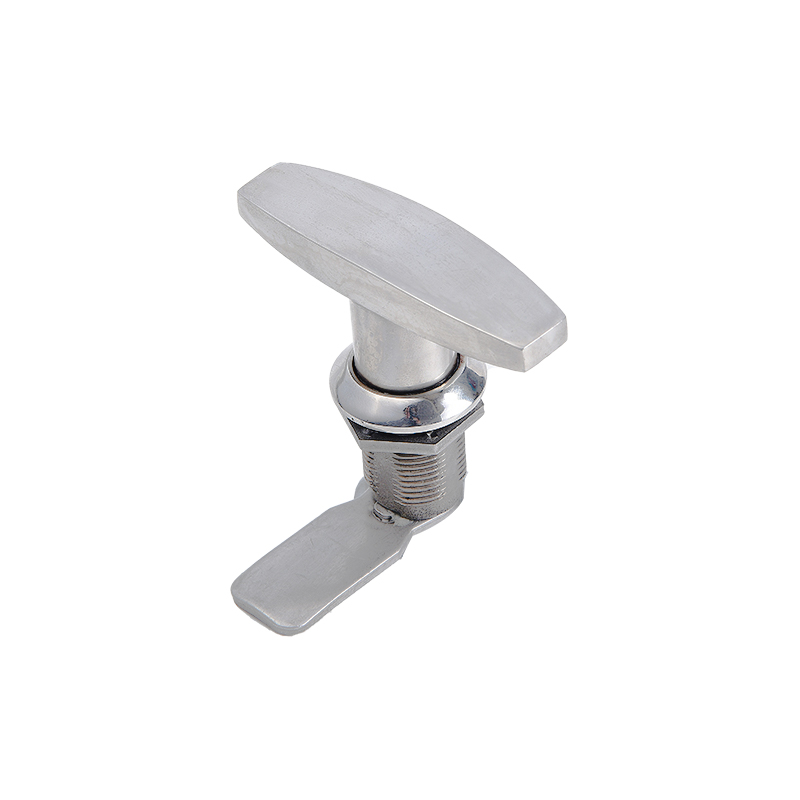
A cylinder lock is the simplest and most widespread type: a keyed plug turns a cam or a small bolt behind the panel, usually through a quarter turn. In cabinet hardware these are often called cam locks or quarter-turn locks, and the variation sits in the details — cylinder length, key profile, and material. Triangular 8 mm keys, square 6.6 mm and 8.8 mm keys, slotted keys and flat blade keys all exist because different industries standardised on different shapes, partly for convenience and partly to keep casual hands out. You will also see brass, zinc alloy and stainless steel bodies, and options such as a spring dust cover or a rubber seal for outdoor panels. If you want a deeper walkthrough of this family, there is a useful breakdown of cabinet cylinder lock types and their uses that goes into the individual variants.
Handle Locks
When a door needs a grip as well as a lock, the handle lock takes over. A lever or knob is combined with an internal latch or bolt, and turning the handle retracts it. The specification points that come up most often are rotation angle (90° and 60° are common), handing, and whether the handle carries a lock cylinder insert or is supplied coreless so the customer fits their own. Left-and-right universal designs are popular on maintenance cabinets because one part number covers both door swings, and padlockable versions appear wherever a site needs to add a personal lock during service work.
Compression Latch Locks
Compression latches are the type you choose when sealing matters. Closing the handle first pulls the door in against the frame and then compresses the gasket, which is why they turn up on outdoor enclosures, washdown areas and anything expected to hold an IP rating. Many are adjustable so the compression can be tuned as the gasket ages, and they come with or without a lock cylinder, with or without a hook, and with different handle styles. A representative example is the zinc alloy MS3092 compression latch, which shows the typical form factor.
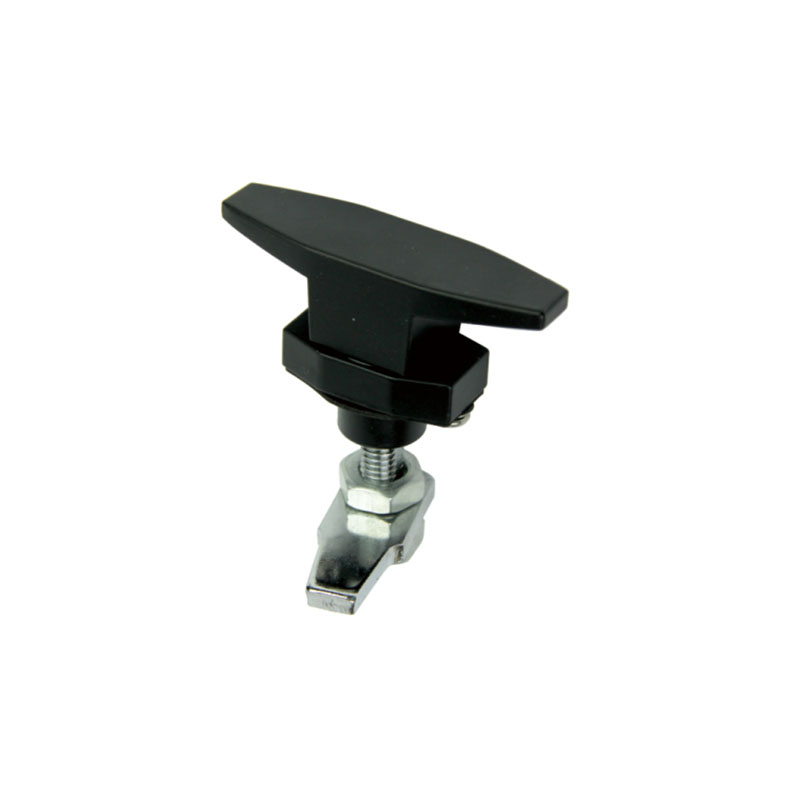 MS309-2 Zinc Alloy Compression Cabinet LatchZinc alloy compression latch for industrial cabinet doors, with 6 mm compression and adjustable stop height; relevant where gasket sealing and adjustable closure are needed.View Product →
Flat Door Locks and Panel Locks
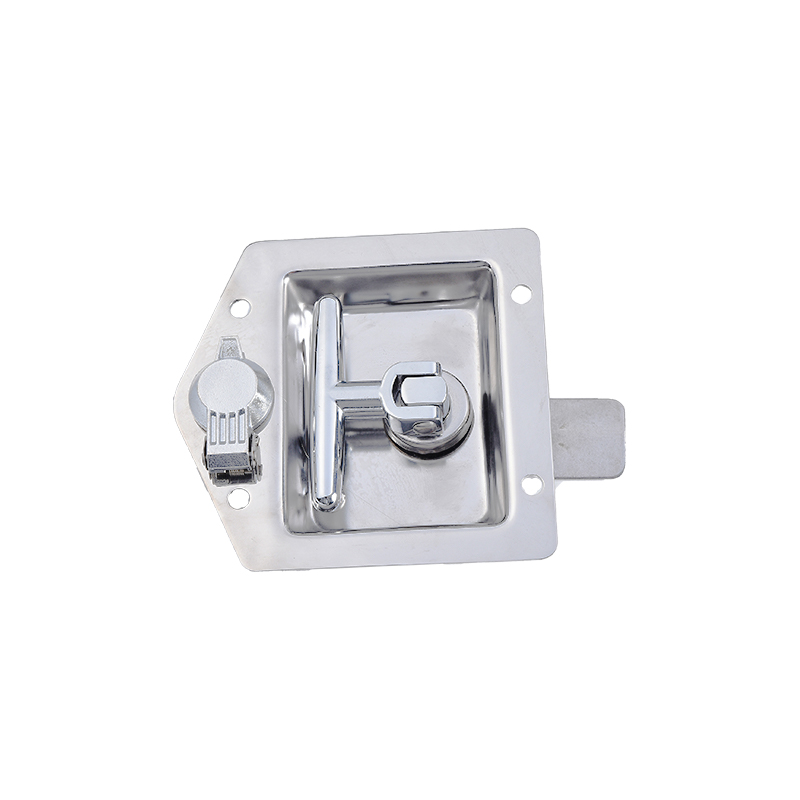
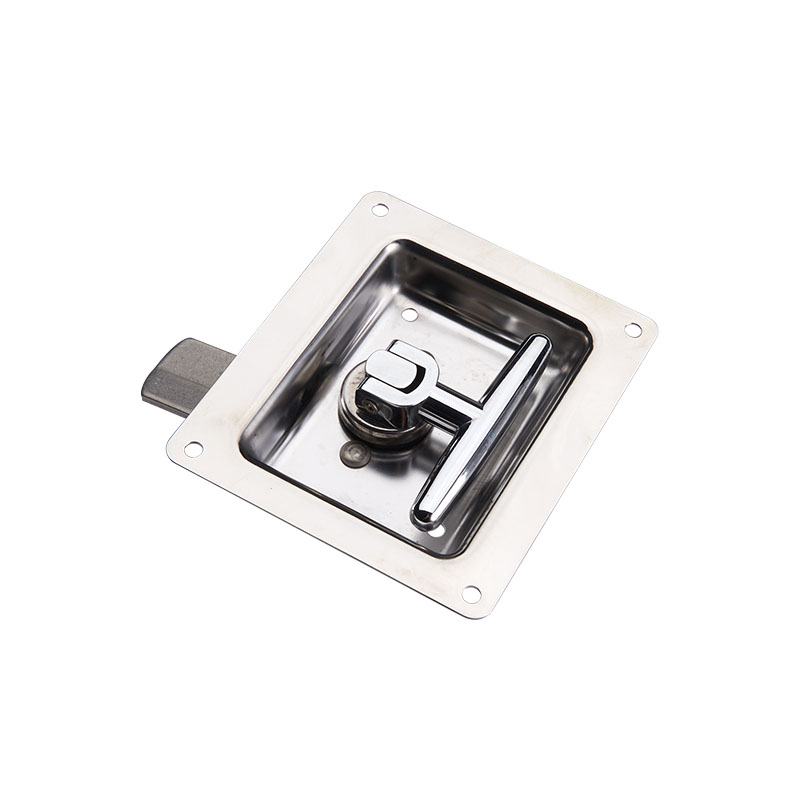
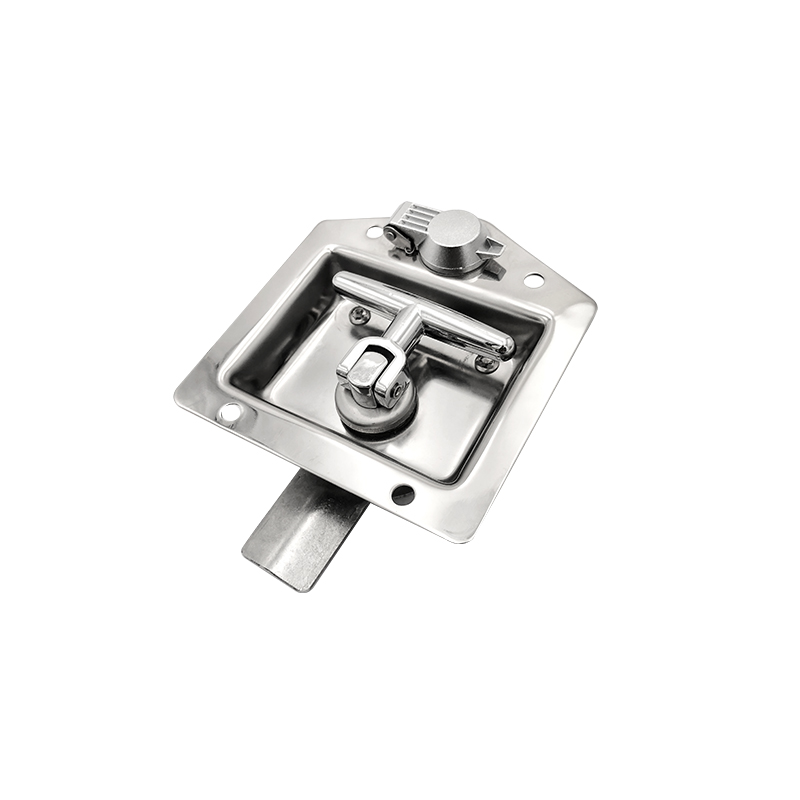
Flat door locks sit low against the door surface, which makes them a good fit for thin panels, sliding doors and enclosures where a protruding handle would be caught or damaged. Panel locks are close cousins and are often built for impact resistance, with reinforced plates and heavy bolts, so they suit doors that get kicked, bumped or levered in daily use. Padlockable versions are common on utility and telecom cabinets where a site padlock has to be added on top of the built-in key.
Connecting Rod Locks
On a tall or wide door, a single latch point in the middle leaves the corners free to flex. Connecting rod locks solve this by using the handle to drive steel rods up and down, so the door locks at two or three points at once. This is the standard approach for transformer cabinets, switchgear enclosures and large machine guards. When specifying one, the questions are how far the rods travel, how many locking points are needed, whether the handle rotates or swings, and whether the assembly needs internal and external sealing. The MS731 three-point version is a good reference point for the category.
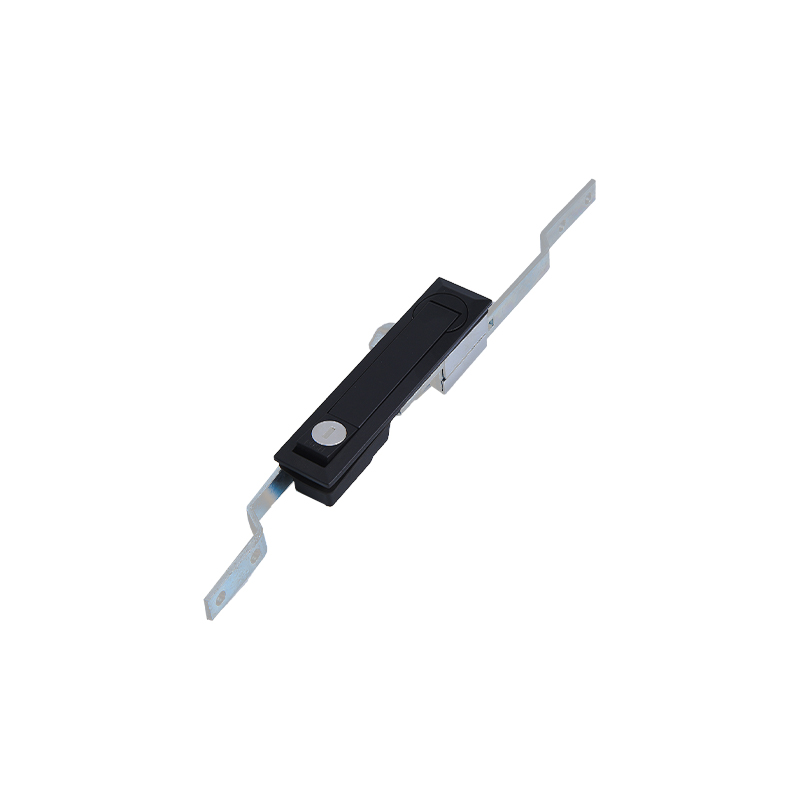 MS731 Zinc Alloy Three-Point Connecting Rod LockThree-point connecting-rod lock for tall or wide industrial enclosure doors, using a 90° handle rotation to drive multiple locking points and reduce corner flex.View Product →
Electronic Lock Types: Active and Passive
Electronic locking has moved from novelty to routine in industrial settings, but the terminology confuses people because the split is not about the keypad — it is about where the power comes from.
An active electronic lock carries its own power and control electronics, so it can be wired into a system and operated remotely, by app, or through a network. That makes it the natural choice where access needs to be logged, scheduled or granted to someone who is not standing at the cabinet.
A passive electronic lock has no battery and no wiring inside the lock itself. The electronic key supplies both the identity check and the power when it touches the lock, and the lock only releases for an authorised credential. This is often the more practical option on remote sites, in sealed enclosures, or anywhere running a cable to a door is more trouble than it is worth. Modern versions support app-based issue of a temporary authorisation, QR-code credentials and a mechanical or Bluetooth key for emergencies. The DS7052M is a straightforward example of the passive approach, opened with an electronic key rather than a conventional cut key.
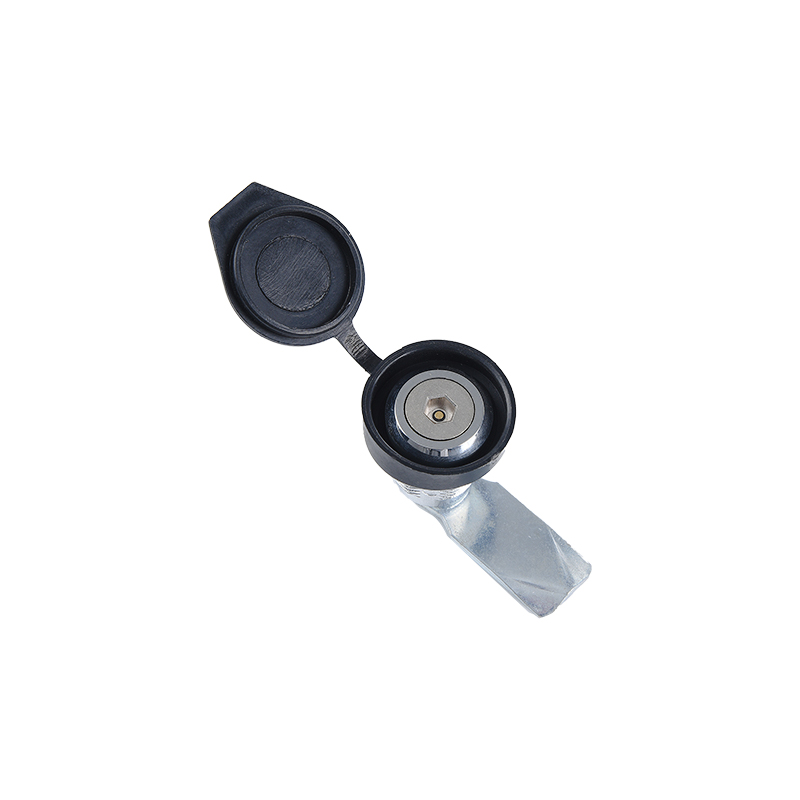 DS705-2M Passive Electronic Cabinet LockPassive electronic lock opened by an electronic key, suited to cabinets and equipment where no internal battery or wiring is wanted.View Product →
A Side-by-Side Comparison of Common Lock Types
The table below is the summary we usually sketch on a whiteboard when a customer is weighing options. It is not exhaustive, but it covers the types that come up in most enclosure projects.
| Lock type | How it works | Where it fits | Details worth checking |
|---|---|---|---|
| Cylinder lock | Keyed plug turns a cam or bolt through a quarter turn | Small enclosures, meter boxes, control cabinets | Key profile, cylinder length, dust cover, body material |
| Handle lock | Lever or knob retracts an internal latch or bolt | Access doors that need a grip as well as a lock | Rotation angle, handing, cylinder insert, padlock hasp |
| Compression latch | Handle draws the door in and compresses the gasket | Sealed, outdoor and washdown enclosures | Adjustment range, gasket compression, hook options |
| Flat door lock | Low-profile body with a bolt behind the panel | Thin panels, flush and sliding doors | Panel thickness, bolt travel, static load rating |
| Connecting rod lock | Handle drives rods to lock at two or three points | Tall or wide doors, transformer and switchgear cabinets | Rod travel, number of points, sealing, drive mechanism |
| Active electronic lock | Powered lock controlled by a system or app | Sites needing remote access control and audit trails | Power supply, wiring route, fail-safe or fail-secure |
| Passive electronic lock | No internal power; the electronic key supplies identity and energy | Remote or unwired cabinets, temporary access | Key management, emergency override, authorisation policy |
Read across a row and you can usually see quickly whether the closing action matches the door, and whether the access method matches the people who will actually open it.
What to Check Before You Settle on a Lock Type
Choosing the family is the easy part. The failures we see are almost always in the fit between the lock and the door, not in the mechanism itself. These are the points we run through with customers:
- Door thickness and material. A lock designed for a 1.5 mm sheet metal door will not seat properly in a 3 mm stainless panel, and the reverse can leave the cam short of the frame.
- Gasket and sealing requirements. If the enclosure has to hold an IP rating, a compression latch or a rod lock with internal and external sealing is usually necessary; a plain cam lock is not.
- Environment. Coastal, chemical and outdoor installations push you towards SUS304 or SUS316 stainless steel bodies and covers, plus dust caps and waterproof covers on the keyway.
- Handing and swing direction. Universal left-and-right designs simplify spares, but a handed lock is often more compact and better protected.
- Load and vibration. Static load ratings and locking point count matter on large doors, machine guards and anything mounted on moving equipment.
- Access policy. Decide early whether the site needs a physical key, a padlock for personal isolation, a tool key, or an electronic credential with a record of who opened what.
- Spares and standardisation. Reducing the number of key profiles and part numbers across a plant pays back for years in maintenance.
Supporting Hardware Around the Lock
A lock is rarely alone on a door. Hinges decide whether the panel still lines up after a thousand cycles, folding supports and limit stays stop a heavy door from swinging past its intended angle, and handles take the daily wear that would otherwise reach the lock. Then there are the small parts that make a system work: steel bolts, connecting rods, rollers, tool keys, and waterproof or dust covers. Getting these right is often what makes a chosen lock type behave well in service, which is why we keep them in the same catalogue as the locks themselves — you can browse our industrial lock range to see how the pieces fit together.
A Final Word on Choosing a Lock Type
There is no single best lock type, only the type that matches a particular door, environment and group of users. Start with the closing action, confirm the sealing and material requirements, and only then decide how the lock should be operated. Do that in order and the choice usually becomes obvious. And if you are stuck between two options, tell us what the door looks like and where it is installed — after enough projects, that is usually all we need to point you in the right direction.