language
 Español

Whether you're replacing a bedroom door or planning an access panel for an industrial cabinet, the first question is usually the same: slab door or prehung? It's an easy phrase to say, but the two options are built very differently. Understanding the difference between a slab door and a prehung door will save you from buying the wrong unit, spending too many weekends on a single door, and ending up with misaligned hinges.
What Is a Slab Door?
A slab door is exactly what the name says: a door slab. It is the flat, solid, or hollow-core panel that swings open and closed. What you don't get is the supporting package. No jamb, no hinges, no lock prep. Some slab doors come with a pre-cut bore for a cylindrical knob, but they don't come with the knob itself or any means of attaching it.
That means a slab door is only a good fit when the existing frame is already square, stable, and the right size. The installer has to measure and trim the slab to fit, route the hinge mortises, and drill for the strike set. For someone with a workshop and patience, this can be a rewarding project. For someone expecting a bolt-on swap, it becomes a day of precision work.
What Is a Prehung Door?
A prehung door is a complete door unit. It includes the door slab, a three-sided jamb, factory-installed hinges, and usually a pre-drilled latch or lock bore. The whole assembly is designed to be set into a rough opening, shimmed until plumb and level, and then screwed into the framing.
This construction makes prehung doors the go-to choice for new construction, gut renovations, and any time the old frame is damaged. It also removes a lot of guesswork, because the gap between the door and jamb is set at the factory. For DIYers, a prehung door is the more forgiving route.
Key Differences Between Slab and Prehung Doors
Once you see the components side by side, the difference becomes more concrete. The table below summarizes the main points.
| Feature | Slab Door | Prehung Door |
|---|---|---|
| What's included | Door panel only | Door panel, jamb, hinges, pre-drilled latch or lock bore |
| Frame condition | Must have sound existing frame | Works with damaged frames or new construction |
| Installation skill | High: cutting, mortising, boring | Moderate: shimming, leveling, screwing |
| Upfront cost | Lower product price | Higher product price |
| Total installed cost | Often higher when labor is added | Often lower when labor is added |
| Installation time | Longer per door | Quicker per door |
| Flexibility | Can be trimmed to odd sizes | Limited to standard sizes or custom order |
Cost is the first thing most people compare. At retail, a slab door usually has a lower price tag than the same door in a prehung version. But that lower price doesn't include the labor, router bits, chisels, saws, and clamps needed to turn it into a functioning door. If you pay a carpenter for that work, the total cost can quickly exceed a prehung installation. A prehung unit costs more upfront but less to install, which is why contractors often prefer it even when the product price seems higher.
Installation is where the two options diverge even more. A slab requires careful fitting to an existing jamb. The door must be trimmed on the hinge edge, lock edge, top, or bottom depending on the opening. Hinge mortises have to align with existing hinges. The latch edge must mate with the strike plate. Any mistake in these cuts is hard to undo. A prehung door, by contrast, is installed as a single assembly. You check the rough opening for plumb, shim the jamb, screw it in place, and attach the trim. That's why so many DIYers choose prehung for their first door replacement.
The DIY factor also favors prehung for beginners. Slab doors require confidence with circular saws and routers. If you only need to replace one interior door and don't own those tools, buying a slab door to "save money" often turns into renting tools and buying new parts anyway. Prehung doors reduce the tool list to a level, a drill, shims, and perhaps a handsaw.
How to Choose: Slab or Prehung?
If you're standing in the aisle trying to decide, work backward from the frame.
Choose a slab door if:
- The existing frame is square, undamaged, and you want a lower initial cost.
- You need a non-standard size and can cut a panel to fit.
- You have, or are willing to buy, the tools for routing and trimming.
- You plan to refinish the door and want to do the preparation yourself.
Choose a prehung door if:
- The existing frame is rotten, twisted, or missing.
- You're building a new wall or opening.
- You want the fastest, most straightforward installation.
- Air sealing and door-jamb alignment matter more than the upfront saving.
One common misunderstanding is that slab and prehung are completely different product families. In reality, a prehung door is simply a door slab pre-assembled to a jamb. The same slab is often available separately. So your decision is not about the panel itself; it's about whether you need a frame and hardware package around it.
The Industrial Cabinet Perspective: Slab-Style Panels and Hardware
The slab-versus-prehung idea doesn't disappear when you move from residential doors to industrial enclosures. In fact, most industrial cabinets are built around the same principle as a slab door: a flat metal panel mounted to a fixed frame. The difference is that the frame is usually welded or screwed into the enclosure, so there is no "prehung" option in the traditional sense. Instead, the quality of the installation lives in the hardware that hangs the slab and secures it.
Hinges carry the daily load
Hinges do the physical work every time someone opens the door. In a clean interior setting, a zinc-plated hinge may be perfectly fine. But for outdoor enclosures, food processing lines, or coastal environments, stainless steel is the more reliable choice. It resists pitting and keeps the swing smooth for years. A good hinge also needs the right pin design and load rating for the door's weight.
Locks turn convenience into control
Locks are the second half of that equation. A slab door with poor lock prep will never close securely, no matter how good the hinge is. In industrial settings, handle locks are popular because they give operators a large grip even with gloves and can integrate with padlocks or tool-key security. Stainless steel handle locks are especially useful in washdown environments where moisture is constant.
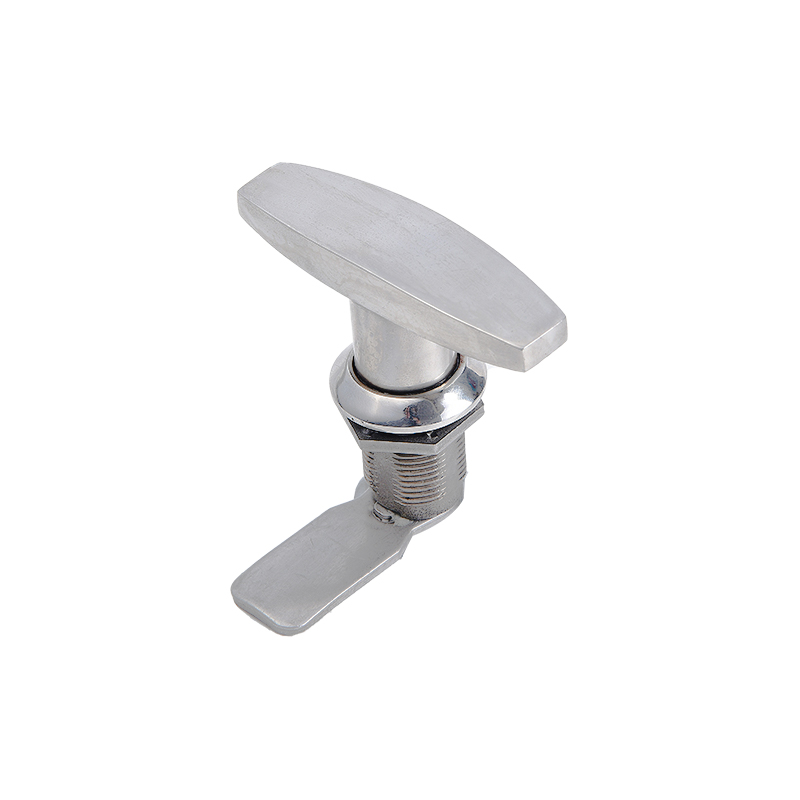 Stainless Steel Industrial Coreless Handle Lock for Washdown EnvironmentsThis corrosion-resistant handle lock offers a 90-degree operation and high load capacity, making it a reliable choice for securing industrial cabinets in moist or washdown settings.View Product →
For a closer look at how we approach lock materials and daily-use durability, you can read our notes on stainless steel industrial coreless handle locks.
Final Thoughts
At the end of the day, the choice between a slab door and a prehung door comes down to the condition of your frame and how much precision work you're ready to handle. If the frame is sound and you have the tools, a slab offers flexibility and a lower price. If you want a dependable installation without hours of fitting, a prehung unit is hard to beat. In industrial projects, the same logic applies, except the frame is metal and the hinges and locks become the real decision drivers.
Whether you're fitting out a control cabinet, a switchgear enclosure, or a simple access door, we build hardware that makes slab-style panels perform like a factory-assembled unit. You can browse our industrial door hardware to see the range.