language
  Español

An over center compression latch is a mechanical fastening device that uses toggle-action geometry to generate compressive clamping force across a panel joint, enclosure lid, or access door — locking itself in position when the handle passes beyond the pivot point and enters a state of mechanical self-retention.
Used across aerospace, defence, transportation, food processing, industrial enclosures, and marine engineering, the over center compression latch is one of the most versatile and reliable fastening mechanisms in commercial hardware. Its fundamental value proposition — that it pulls two mating surfaces together under controlled, adjustable compression while simultaneously locking itself without secondary hardware — makes it the go-to solution wherever vibration resistance, weatherproofing, or panel-to-panel sealing is required. This guide explores how the mechanism works, the types available, material and finish options, application guidance, and how to select and install the right latch for your specific requirements.
How an Over Center Compression Latch Works
The operating principle of an over center compression latch is rooted in toggle mechanics — a branch of mechanical engineering concerned with systems that pass through a geometric dead-centre point and become self-locking in the process. Understanding the mechanism demystifies both its reliability and the design constraints that govern its correct specification.
The latch body is fixed to one panel (typically a door, lid, or access hatch). A hook, staple, or keeper is fixed to the mating panel or frame. When the latch handle is pulled to its open position, the pivot geometry places the actuating linkage on the accessible side of centre — meaning the system can move freely. As the handle is pressed closed, the linkage passes through the dead-centre point, the hook engages the keeper, and the continued movement of the handle beyond centre compresses the two panels together. The critical insight is that in the fully closed position, any load applied to try to open the latch actually reinforces the clamping geometry rather than releasing it — the latch is self-locking by mechanism, not by friction or auxiliary spring alone.
Open Position
Handle raised, linkage on near side of centre. Hook disengaged from keeper. Panels free to separate.
Transition
Handle depressed, hook contacts keeper. Linkage approaching dead-centre point.
Over Centre
Linkage crosses dead-centre. Compression begins. System becomes self-locking.
Closed & Locked
Handle fully seated. Panels compressed. Mechanism self-retained against vibration and load.
The compression force generated is adjustable. Most over center compression latches feature a threaded hook or threaded keeper that can be wound in or out to increase or decrease the draw — the amount the panels are pulled together on closing. Correct draw adjustment is essential: too little draw produces insufficient sealing pressure; too much creates excessive operating force, premature wear on gaskets, and potential damage to panel materials.
The over center compression latch generates its holding force through geometry, not friction — which is why it maintains its grip through vibration, thermal cycling, and decades of use where friction-dependent fasteners would long since have failed.
Types of Over Center Compression Latch
The category encompasses a range of designs adapted to different panel thicknesses, compression requirements, environmental conditions, and security levels. Selecting the correct type is as important as selecting the correct size.
Standard Toggle Latch (Open Handle)
The most common form. A bare metal handle rotates on a pivot to engage a hook over a fixed keeper ring or bar. No secondary locking. Widely used in enclosures, toolboxes, flight cases, and general industrial applications where speed of access is prioritised. Available in single or double-action (requiring two-hand operation to open) variants for safety-critical applications.
Draw Latch with Swivel Hook
Features a rotating hook that can swing clear of the keeper before the handle is operated, reducing wear and simplifying opening on panels that are not perfectly aligned. The swivel geometry also accommodates slight misalignment between door and frame — particularly valuable on large access panels that may flex under load or thermal expansion.
Lockable Over Center Latch
Incorporates a padlock hasp, cylinder lock barrel, or integral key-operated lock into the latch handle. When locked, the handle cannot be lifted regardless of applied force. Used in security enclosures, utility cabinets, hazardous material storage, and any application where unauthorised access prevention is required alongside compression sealing.
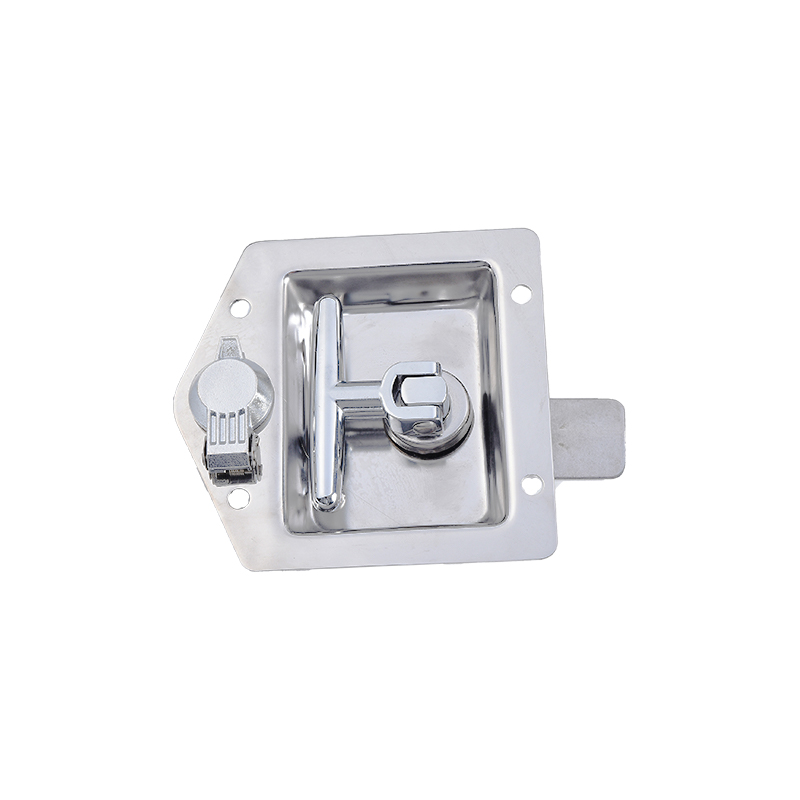
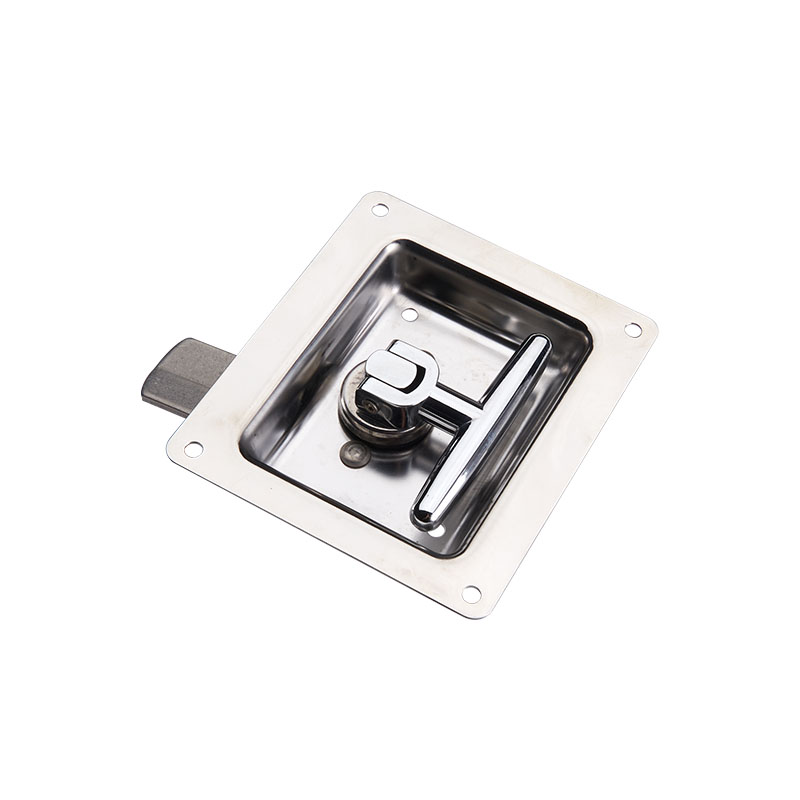
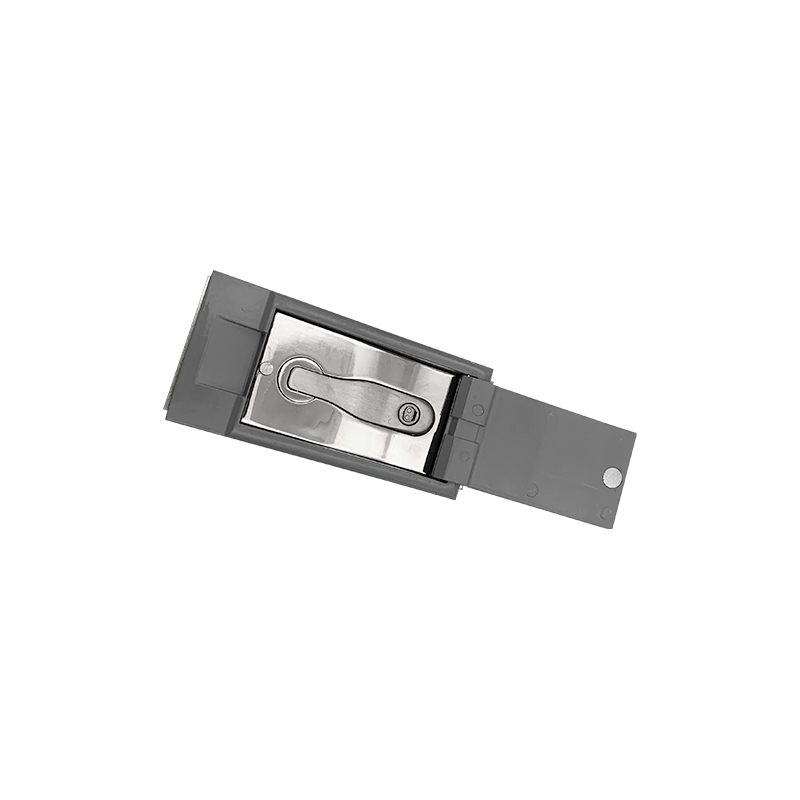
Flush / Recessed Compression Latch
Designed to sit flush with or below the surface of the panel when closed, preventing snag hazards and reducing aerodynamic drag. The handle folds into a recessed pocket and must be extracted with a finger or tool before the latch can be operated. Common in aerospace panels, vehicle bodywork, and precision equipment enclosures where a clean external profile is required.
Sealed / Gasket-Integrated Latch
Designed specifically for weatherproof, dustproof, or IP-rated enclosures. The latch body includes a co-moulded or separately fitted elastomeric seal that compresses against the frame or panel face when the latch is closed, forming an environmental barrier. Essential in electrical enclosures, outdoor equipment housings, and marine applications.
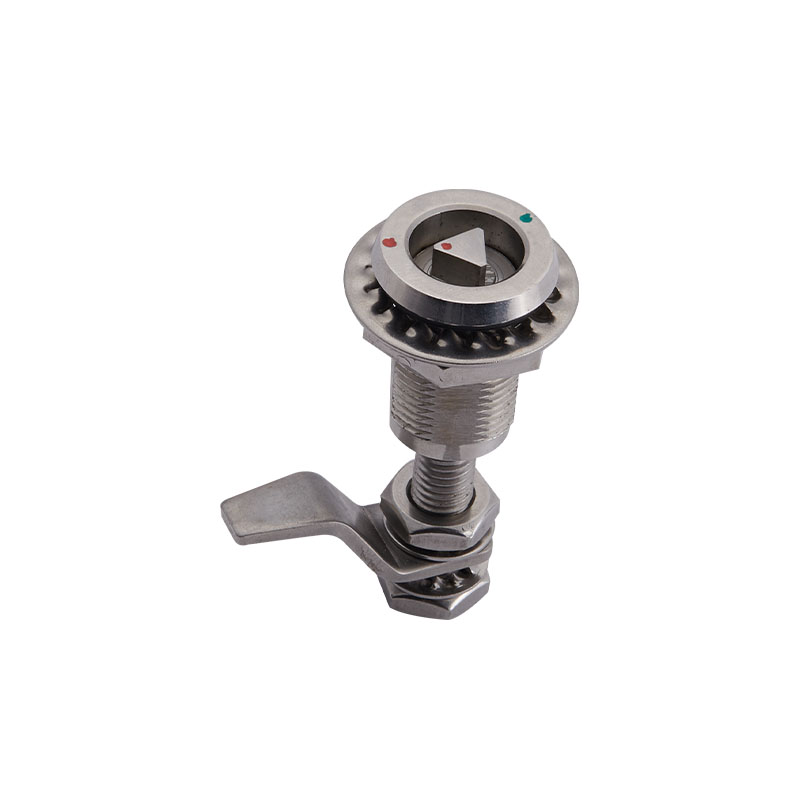
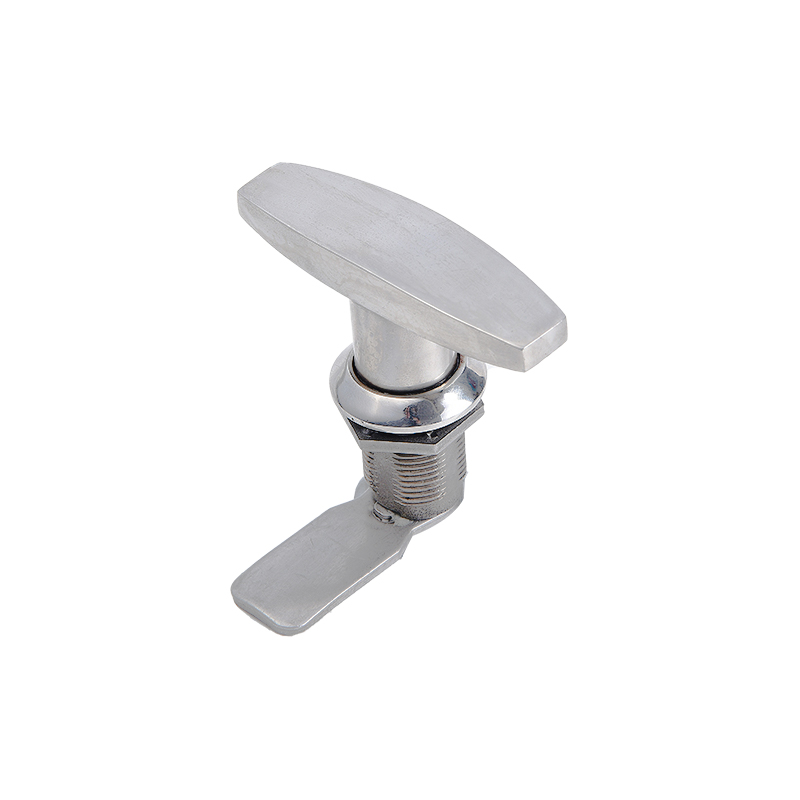
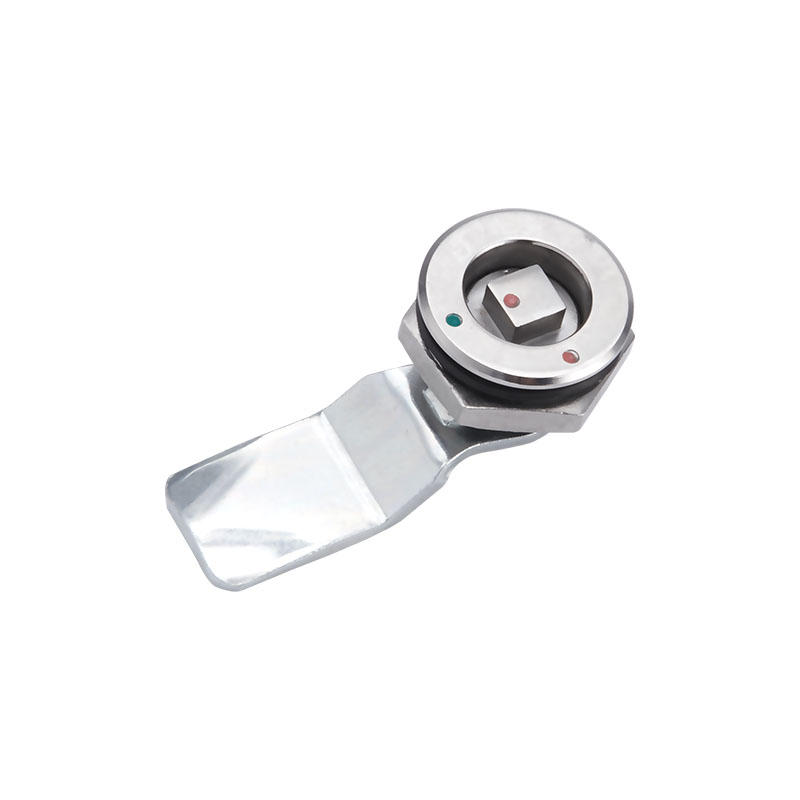
Quarter-Turn with Over Center Action
A hybrid mechanism combining the panel penetration advantages of a quarter-turn fastener with over center self-locking geometry. The fastener is inserted through a hole in the panel, rotated 90°, and the cam action pulls the panel into compression. Used extensively in automotive bodywork panels, aircraft access doors, and rapid-service enclosures where tool-free operation and flush fit are both required.
Heavy-Duty Industrial Toggle Latch
Engineered for high-force applications — container doors, industrial ovens, pressure vessel hatches, and large access covers. Features reinforced pivot pins, wider base footprints for load distribution, and stainless steel or zinc alloy construction rated for sustained compression forces exceeding 1,000 N. Draw adjustment ranges are wider to accommodate thick gaskets or significant panel deflection.
Wire Toggle Latch (Bail-Style)
Uses a formed wire handle rather than a stamped or cast metal body. The wire bail provides a lighter, more flexible alternative for applications where the full compressive force of a solid-body latch is unnecessary. Common in packaging, food containers, brewing vessels, and low-load enclosures where cost, weight, and corrosion resistance are primary drivers.
Key Advantages of Over Center Compression Latches
-
01Vibration Resistance The over-centre geometry means the latch cannot rattle or creep open under vibration. Unlike spring-loaded catches or friction clips, there is no threshold force below which the latch might progressively work loose.
-
02Adjustable Compression Draw adjustment via the threaded hook allows the clamping force to be tuned to suit the gasket, panel material, and sealing requirement — without replacing any component.
-
03Tool-Free Operation The majority of over center compression latches are operated by hand without tools — important for maintenance access panels, service hatches, and any enclosure requiring frequent opening.
-
04Sealing Performance By pulling panels together under controlled, consistent force, the latch compresses gaskets evenly across the joint — achieving superior weatherproofing, dust exclusion, and in some applications acoustic or thermal sealing.
-
05Long Service Life The mechanism has very few moving parts — typically a pivot pin, a handle body, and a hook — resulting in a long, reliable service life with minimal maintenance in most environments.
-
06Wide Load Range From wire bail latches rated for a few dozen Newtons of compression to heavy-duty industrial toggle latches capable of sustained forces exceeding 2,000 N, the category spans an enormous range of load requirements.
Applications by Industry
Aerospace
Access panels, avionics bays, cargo doors, and engine cowlings. Flush and quarter-turn variants dominate to minimise aerodynamic profile.
Transport & Logistics
Truck body panels, refrigerated container doors, equipment lockers, and toolbox lids. Vibration resistance and weather sealing are primary requirements.Electrical Enclosures
IP-rated switchgear panels, control cabinet doors, and junction box covers where dust and moisture exclusion must be maintained over years of service.
Food Processing
Stainless steel hygienic enclosures, commercial oven doors, and food storage containers requiring frequent cleaning, corrosion resistance, and positive sealing.Marine
Hatch covers, locker lids, and access panels on vessels requiring maximum corrosion resistance and secure closure in high-vibration, salt-water environments.
AV & Flight Cases
Instrument cases, flight cases, and broadcast equipment housings where repeated opening and closing cycles demand reliable retention without secondary fasteners.
Industrial Machinery
Guard panels, access hatches, and maintenance covers on production machinery where tool-free access is required but unauthorised opening must be preventable.
Automotive
Hood latches, tonneau covers, racing bodywork, and utility vehicle storage panels. Flush variants are preferred to avoid protrusions on aerodynamic surfaces.
Medical Equipment
Equipment housings, sterilisation chamber doors, and diagnostic instrument enclosures requiring cleanability, positive closure, and reliable performance over high cycle counts.
Materials and Finish Options
The material and surface finish of an over center compression latch determines its corrosion resistance, strength, operating temperature range, weight, and suitability for regulatory environments such as food contact or medical applications.
Steel (Zinc Plated)
Stainless Steel (316)
Zinc Alloy (Die Cast)
Beyond the three primary materials, nylon and glass-filled polymer latches are available for applications requiring electrical non-conductivity, chemical resistance (particularly to acids and solvents), or weight reduction. Aluminium alloy latches offer an excellent strength-to-weight ratio and good corrosion resistance, making them common in aerospace and lightweight transport applications. Electrophoretic (E-coat) and powder-coated steel latches extend corrosion resistance significantly beyond standard zinc plating while maintaining the cost advantage of carbon steel.
Always order sample latches before specifying a large production quantity. Fit the sample latch to the actual panel assembly, adjust the draw to the intended gasket compression value, and complete a minimum of 50 open/close cycles to confirm that the mechanism operates smoothly, the panel achieves the required seal, and the handle position is ergonomically accessible to operators in the actual working context.
Installation Guide
Correct installation is essential for an over center compression latch to perform reliably. Most field failures of over center latches — premature wear, inadequate sealing, unintended opening — can be traced to installation errors rather than product defects.
-
01Position the Latch Body Mount the latch body on the door, lid, or access panel using the manufacturer's drilling template. Ensure that the hook axis is perpendicular to the panel edge and that the latch is positioned such that the handle swings clear of obstructions in both open and closed positions. Use a drill press or guide where possible to ensure hole accuracy.
-
02Install Backing Plates if Required On panels thinner than 1.5 mm or fabricated from soft materials (aluminium, GRP, plastic), install reinforcing backing plates behind the mounting holes to distribute the clamping load. Use stainless steel or galvanised backing plates sized to distribute load across an area of at least 4× the latch footprint.
-
03Mount the Keeper / Staple With the latch body correctly positioned, close the latch and mark the keeper position on the mating frame or panel. The keeper should align with the hook centreline. Install the keeper, ensuring its fixing bolts are torqued to specification. Many keepers have slotted fixing holes to allow fine positional adjustment after initial installation.
-
04Adjust the Draw Thread the hook in or out on its adjuster until closing the latch compresses the panels or gasket to the specified dimension. The latch should close with firm but not excessive hand pressure — if the handle requires tools or exceptional force to close, reduce the draw. If the panels move perceptibly when the latch is closed, increase the draw. Lock the adjuster with the locknut once set.
-
05Verify Sealing Performance For sealed enclosures, verify gasket compression visually (checking that the gasket is evenly compressed around the full perimeter) or quantitatively using a feeler gauge at multiple points. For IP-rated enclosures, carry out a water ingress test or pressure decay test to confirm the specified protection rating has been achieved with the latches installed and correctly adjusted.
-
06Apply Fastener Locking Apply thread-locking compound (e.g. medium-strength Loctite 243) to all latch mounting bolts and the draw adjuster locknut. In high-vibration environments, consider Nordlock or serrated flange fasteners for the primary mounting bolts. Document the final draw setting in the assembly record for future maintenance reference.
Maintenance and Troubleshooting
Over center compression latches require minimal maintenance but benefit from periodic inspection — particularly in environments with high cycle counts, exposure to dust or corrosives, or extremes of temperature.
Routine Lubrication
Apply a light machine oil or dry lubricant to the pivot pin and hook thread every 6–12 months under normal conditions, or every 1,000–2,000 operating cycles in high-frequency applications. Avoid heavy grease in dusty environments as it attracts particulate contamination that accelerates wear on the pivot. In food processing or pharmaceutical environments, use only NSF H1-rated lubricants approved for incidental food contact.
Draw Adjustment Check
Gaskets compress and creep over time, particularly in the first weeks after installation. Re-check draw adjustment after the first month of service and annually thereafter. Signs that draw has become insufficient include the panel rattling when the latch is closed, deteriorating weather or dust ingress, and the latch handle having noticeably more travel before the panel is fully compressed.
Common Failure Modes and Remedies
Latch will not stay closed: Usually caused by insufficient draw, a worn keeper, or a bent hook. Increase draw first; if the problem persists, inspect the hook and keeper for wear or deformation. Excessive closing force: Reduce the draw — the latch is over-compressed. In extreme cases, check whether gasket creep has effectively increased panel gap, requiring draw reduction. Handle vibrates in closed position: Indicates the latch is operating very close to its centre point. Increase draw slightly to move further over centre. Corrosion on pivot: In marine or outdoor environments, flush pivot with fresh water regularly and re-lubricate. If corrosion is severe, replace the pivot pin — most quality latches supply this as a serviceable part.
Frequently Asked Questions
QWhat is the difference between an over center latch and a draw latch?
The terms are often used interchangeably, but there is a technical distinction. All over center latches are draw latches in that they draw two panels together — but not all draw latches are over center. A basic draw latch may hold tension without passing through the geometric dead-centre point, relying on spring force or a secondary catch to remain closed. An over center latch specifically passes through the toggle geometry dead-centre, making it geometrically self-locking without relying on spring force for retention. Over center latches are more vibration-resistant and more consistent in their holding performance over their service life.
QHow much compression force can an over center compression latch generate?
This varies enormously across the product range. Small wire bail latches on packaging may generate 50–150 N of compression force. Standard medium-duty toggle latches for equipment enclosures and flight cases typically produce 200–600 N. Heavy-duty industrial toggle latches for container doors, oven doors, and pressure vessel hatches can generate 1,000–3,000 N or more. Always check the manufacturer's published rated draw force for the specific latch model and confirm it is appropriate for the gasket compression force calculation for your application.
QCan over center compression latches be used on curved or non-planar surfaces?
Standard over center latches are designed for flat panel applications. However, swivel hook variants and draw latches with adjustable keeper geometry can accommodate modest panel curvature or angular misalignment — typically up to 5–10 degrees depending on the design. For significantly curved surfaces, a specialist fastener with a spherical or self-aligning keeper should be specified. Always trial-fit on the actual geometry before finalising the design.
QWhat IP rating can be achieved with an over center compression latch?
The IP rating of a sealed enclosure is determined by the gasket, the frame-to-panel joint design, and the compression force applied by the latches — not by the latch itself in isolation. With correctly specified continuous perimeter gaskets and adequate, evenly distributed compression from over center latches, IP54, IP65, IP66, and IP67 ratings are routinely achievable in production enclosures. IP68 (continuous immersion) requires more specialised sealing design but is achievable with appropriately specified latches and gaskets. Always verify the final assembly rating by type testing to IEC 60529 rather than calculating it from component specifications alone.
QHow do I convert between over center latch draw force and gasket compression pressure?
The relationship between latch draw force (N) and gasket compression pressure (kPa or psi) depends on the cross-sectional area of the gasket and the number of latches sharing the load. Gasket manufacturers publish a compression force per linear metre figure for their profiles, which — when multiplied by the total gasket perimeter — gives the total force required. Divide this by the number of latches to find the required draw force per latch. Build in a 20–30% safety margin above the minimum calculated figure to account for panel deflection, alignment tolerances, and gasket ageing.
QAre over center compression latches suitable for food processing environments?
Yes — stainless steel 316 grade over center latches are widely used in food and beverage processing, pharmaceutical manufacturing, and commercial catering equipment. For hygienic applications, specify latches with smooth external profiles, no exposed threads, no crevices that could trap food residue, and surfaces compatible with the cleaning and sanitising agents used in the facility. Some manufacturers produce latches specifically designed to comply with EHEDG (European Hygienic Engineering and Design Group) or 3-A Sanitary Standards guidelines — these should be specified for food-contact adjacent applications.
The Right Latch for the Right Application
The over center compression latch earns its place in demanding applications precisely because it does not rely on friction, spring tension, or operator diligence to remain secure. The geometry is the guarantee: once over centre, the mechanism is self-retained against vibration, thermal movement, and sustained load — which is why the same fundamental principle found in a low-cost wire bail latch on a packaging container is also trusted to secure aerospace access panels, marine hatches, and high-pressure industrial enclosures.
Correct specification requires careful attention to compression force requirements, material compatibility with the operating environment, cycle life expectations, and dimensional constraints. Get these parameters right — and take the time to adjust the draw correctly during installation — and an over center compression latch will deliver many years of reliable, maintenance-minimal service in conditions that would rapidly defeat simpler fastening systems.