language
  Español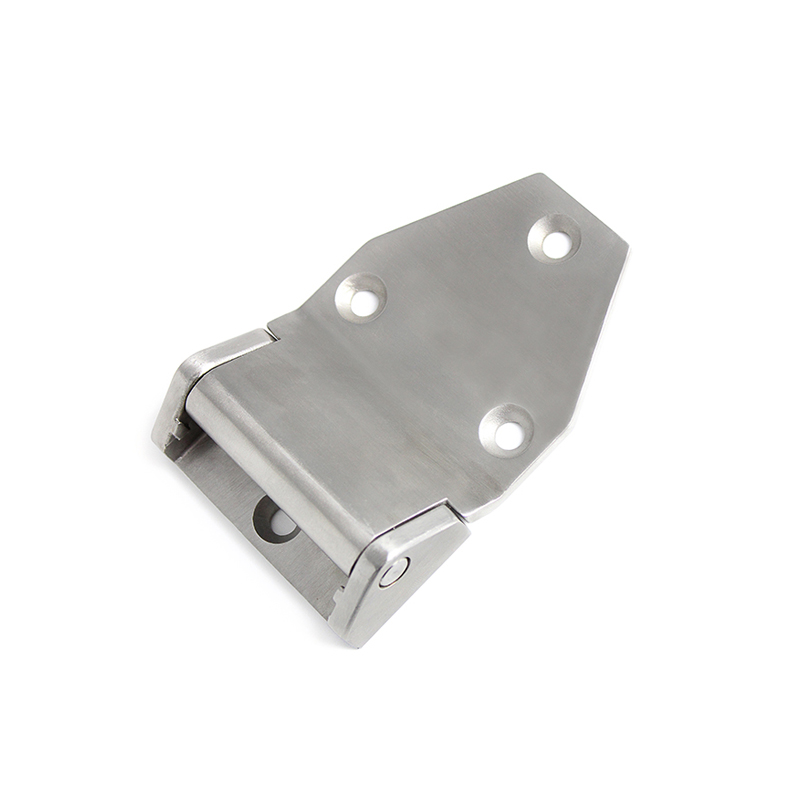

A swivel torque hinge is a mechanical pivot assembly that combines rotational freedom with a calibrated resistance force — measured in torque — that acts throughout the range of motion to hold a connected panel, display, arm, or door at any angle without active locking. Unlike a conventional hinge, which offers no positional resistance and relies on external latches or stops to hold a door shut or open, a swivel torque hinge generates friction-based or spring-biased resistance internally, allowing the connected component to remain stationary at whatever angle the user leaves it.
The defining characteristic is position-hold under load. When a panel weighing several kilograms is rotated to 45 degrees and released, the torque hinge must supply enough resistive force to prevent gravity, vibration, or incidental contact from causing further movement — yet must not resist intentional repositioning by a user applying normal hand force. This dual requirement — hold passively, release intentionally — is the engineering challenge that defines the category.
Swivel torque hinges are differentiated from simple friction hinges by their swivel geometry: they allow rotation around a pivot axis that is itself free to reorient, enabling compound movement in two or more planes. A camera monitor arm that tilts forward and swivels left simultaneously relies on torque-controlled joints at each pivot point. Each joint is, in essence, a swivel torque hinge operating in its own plane while the assembly as a whole enables multi-axis positioning.
How Swivel Torque Hinges Generate Resistance
The torque resistance in a swivel torque hinge can be generated by several distinct mechanical principles. Understanding the mechanism behind a given hinge is essential for matching it correctly to an application's load, cycle life, temperature range, and maintenance requirements.
Friction-Disc Mechanism
The most widespread design stacks a series of alternating friction discs — some keyed to the rotating shaft, others keyed to the stationary housing — and clamps them axially with a preloaded spring or adjustable fastener. As the shaft rotates, the discs slide against each other, and the resulting friction torque opposes motion. The magnitude of torque is determined by the clamp force, the coefficient of friction between disc materials, and the effective radius of the friction interface. Disc materials include stainless steel on PTFE, sintered bronze on hardened steel, and carbon-fibre composite on ceramic — each offering different friction coefficients, wear rates, and temperature tolerances.
Torsion Spring Mechanism
A coiled or flat torsion spring wound around the hinge pivot stores and releases energy as the hinge rotates. In a purely spring-based torque hinge, the resistive torque varies with angular position — it is lower at the neutral position and higher at the extremes of travel. This characteristic suits applications such as self-closing doors or laptop lids, where increasing resistance toward the open position prevents over-travel. Combined spring-and-friction designs blend positional hold with consistent resistance across the full arc.
Fluid Damper Integration
High-cycle or high-precision applications increasingly incorporate a rotary viscous damper alongside the primary friction element. Silicon oil or magnetorheological fluid passing through calibrated orifices generates velocity-dependent resistance: the faster the rotation, the greater the damping force. This prevents sudden, uncontrolled movement when an external force is applied quickly — critical for medical equipment, precision instruments, and display arms where a sudden panel drop could cause injury or damage. The damper does not hold position on its own; it works in tandem with a friction element that provides the static hold force.
Key Performance Parameters Explained
Specifying a swivel torque hinge requires fluency in a small set of mechanical parameters. Misinterpreting any one of them is the most common cause of premature failure or inadequate performance in service.
ParameterDefinitionTypical RangeSelection NoteStatic TorqueResistive force required to initiate rotation from a held position (N·m)0.1 – 50 N·mMust exceed panel weight × moment arm with a safety factor of ≥1.5Dynamic TorqueResistance during active rotation; typically 80–95% of static torque—Should allow smooth, one-finger repositioning by the userTorque VarianceDeviation of torque across the full angular range (%)±5 – ±20%Lower variance = more consistent feel; critical for precision instrumentsCycle LifeNumber of full open/close cycles before torque degrades below specification10,000 – 500,000Match to expected daily use frequency and product service lifeOperating TemperatureAmbient range over which torque stays within rated specification−20°C to +120°CLubricant and disc material choices are temperature-criticalMoment of Inertia LoadRotational inertia of attached panel; relevant when damping is requiredApplication-specificHigh-inertia panels need damper sizing matched to maximum expected velocityIP / Ingress RatingProtection against dust and fluid ingress (EN 60529)IP40 – IP67Food-service, outdoor, and washdown environments require IP65 minimum
Material and Finish Considerations
The environmental and chemical demands of the deployment environment should drive material selection as much as load requirements. A torque hinge that meets its torque specification at installation but corrodes or outgasses in service has failed the application just as surely as one that was mechanically undersized.
Stainless Steel (303 / 316)
The most widely specified body material for swivel torque hinges in demanding environments. Grade 303 offers excellent machinability and good corrosion resistance for indoor and light-outdoor applications. Grade 316 adds molybdenum for superior resistance to chloride corrosion — mandatory in marine, food-processing, and pharmaceutical environments. Internal friction discs in stainless-on-PTFE configurations provide consistent, low-wear operation across the temperature range from −40°C to +150°C.
Aluminium Alloy (6061 / 7075)
Where weight is a primary constraint — portable equipment, handheld devices, aerospace-adjacent applications — aluminium bodies with hard-anodised surfaces offer an excellent strength-to-weight ratio. The anodising layer (20–25μm) provides adequate surface hardness for light to moderate duty cycles but will abrade faster than steel in high-frequency, heavy-load applications. Aluminium bodies are typically paired with hardened steel or ceramic friction elements to avoid accelerated wear at the torque interface.
Engineering Plastics
POM (Delrin), PEEK, and glass-filled nylon are used for hinge bodies and friction elements in applications where electrical insulation, chemical resistance, or extreme weight reduction is essential. Plastic-bodied torque hinges are common in consumer electronics, medical wearables, and laboratory instrumentation. Their torque capacity is lower than metal equivalents, and their cycle life in high-load applications is reduced, but within their operating envelope they offer consistent, reliable performance.
Lubrication matters: The friction element in a torque hinge may be dry-running (PTFE, ceramic, or graphite composite) or lubricated (grease-packed steel discs). Dry-running elements offer cleaner operation, wider temperature range, and lower maintenance burden. Grease-packed designs deliver higher torque density and longer cycle life in heavy-duty applications, but require periodic re-lubrication and are unsuitable for cleanroom or food-contact environments where lubricant migration is prohibited.
Application Domains and Use Cases
Swivel torque hinges appear across a wider range of industries than most engineers initially recognise. Their common thread is the need to hold an articulated component at an arbitrary angle against a sustained load — a requirement that arises in almost every sector of product and equipment design.
Medical and Surgical Equipment
Patient-side monitors, surgical light arms, anaesthesia machine display panels, and diagnostic imaging positioning gantries all rely on swivel torque hinges to maintain precise, stable positioning while allowing rapid, one-handed repositioning by clinical staff. In this context, torque hinges must meet IEC 60601-1 requirements for applied parts, demonstrate chemical resistance to hospital-grade disinfectants, and — where patient contact is possible — carry appropriate biocompatibility certifications. Fluid-damped variants are preferred to prevent injury from sudden uncontrolled panel movement in high-traffic clinical environments.
Consumer Electronics and Laptop Hinges
The laptop computer industry consumes more torque hinges per year than almost any other sector. A modern slim notebook hinge must deliver consistent torque across a 135° arc, survive more than 30,000 open/close cycles (representing roughly ten years of daily use), fit within a profile of 3–5mm, and add no more than 8–12 grams to the assembly. These constraints have driven the development of ultra-thin stacked-leaf friction hinges and precision-stamped torsion spring designs that represent some of the highest torque-per-unit-volume engineering in the category. The same design principles extend to tablet keyboard covers, foldable phone displays, and convertible laptop form factors.
Industrial HMI Panels and Control Interfaces
Human-machine interface panels, operator consoles, and industrial display arms on production machinery require torque hinges capable of sustained static load, resistance to vibration, and reliable performance in environments contaminated by coolant mist, metal particles, or chemical vapour. Heavy-duty friction hinges in IP65 or IP67 rated housings are standard, often with torque values in the 8–30 N·m range to hold large touchscreen panels stable during active operator input.
Camera and Broadcast Equipment
Professional camera arms, on-camera monitors, and broadcast studio articulating mounts depend on multi-axis swivel torque hinges that can simultaneously hold the weight of a monitor or lens assembly while allowing smooth, silent repositioning on camera. Torque consistency across the full arc is particularly critical here: any variation in resistance translates to a visible jerk or drift in the captured image. High-end broadcast applications specify torque variance of ±3% or better.
Furniture and Architectural Hardware
Adjustable-height monitor arms, drafting table easels, articulating reading lights, and folding partition walls all make use of torque hinges scaled to their specific load and cycle requirements. Furniture-grade torque hinges face a different challenge set from industrial equivalents: aesthetic integration, noise suppression, and a smooth, tactile feel under hand force are as important as the mechanical specification. Anodised aluminium bodies with brushed or powder-coated finishes and PTFE friction elements that produce no acoustic signature during movement are typical in this segment.
Aerospace and Defence
Equipment bay doors, avionics rack access panels, and cockpit display arms in aircraft and military vehicles demand torque hinges that maintain specification across extreme temperature cycles, high-vibration environments, and service lives measured in decades. Materials must comply with relevant aerospace standards (AS9100, MIL-SPEC), and designs must often demonstrate no single-point-of-failure modes. Titanium and high-nickel alloy body materials, ceramic friction elements, and mil-spec lubricants are common in these applications.
A correctly specified torque hinge is invisible — it holds exactly what needs holding, releases exactly when the user intends, and does so without hesitation for the life of the product.
— Mechanical design principle, frequently cited in precision hardware specifications
Torque Calculation: Sizing a Hinge for Your Application
Correct torque sizing is the most consequential step in hinge selection. An undersized hinge will fail to hold position; an oversized hinge will resist intentional repositioning and fatigue the user. The calculation process is straightforward once the geometry of the application is defined.
- Determine the panel mass (kg) and geometry. Weigh or calculate the mass of the component the hinge will support. Identify the panel's centre of gravity relative to the hinge pivot axis — this distance is the moment arm (m).
- Calculate the gravitational torque at worst-case angle. For a panel that rotates from vertical to horizontal, worst-case gravitational torque occurs at 90° from vertical: Tgravity = mass (kg) × 9.81 (m/s²) × moment arm (m). Result is in Newton-metres.
- Apply a safety factor. Multiply the calculated gravitational torque by a safety factor of 1.5 to 2.0 to account for vibration, shock loading, and torque degradation over the product's service life.
- Check against user-force ergonomics. Verify that the selected torque value allows comfortable repositioning. As a rule of thumb, a user should be able to move a panel with a finger force of 5–15 N applied at the panel edge. If the required torque exceeds this threshold, consider distributing the load across multiple hinges.
- Account for multiple hinges. When two or more hinges share the load, the required torque per hinge is divided by the number of hinges — but specify all hinges to the same torque value to prevent uneven loading and differential wear.
- Verify cycle life against service expectations. Confirm that the hinge's rated cycle life, at the specified load and temperature, meets or exceeds the expected number of operating cycles over the product's intended service life with an adequate margin.
Common sizing error: Designers frequently calculate torque at the worst-case angle but forget to check whether the resulting hinge torque allows the panel to be repositioned with one hand when the gravity torque is minimal — for example, when moving a panel that is nearly balanced. An oversized hinge may pass the hold-force calculation but fail in usability. Always verify both the hold condition and the repositioning condition.
Installation Best Practices
- Surface flatness and parallelism: Mounting surfaces must be flat to within 0.1mm per 100mm of hinge length. Rocking or twisted mounting faces introduce bending moments into the hinge body that accelerate bearing wear and distort the torque characteristic. Use shim tape or machined spacers where necessary to achieve correct alignment.
- Fastener specification: Use the fastener grade and torque value specified by the hinge manufacturer. Under-torqued fasteners allow micromovement between hinge body and mounting surface, causing fretting corrosion and premature loosening. Over-torqued fasteners distort the hinge body and alter the internal clamp force — directly changing the delivered torque.
- Axis alignment: In multi-hinge installations, all hinge pivot axes must be collinear to within the manufacturer's alignment tolerance (typically ±0.5mm lateral offset and ±0.5° angular misalignment). Misalignment introduces side loads that the hinge is not designed to carry, dramatically reducing bearing life.
- Torque direction convention: Confirm the hinge's torque direction characteristic before installation. Most torque hinges are bidirectional (equal resistance in both rotational directions), but some spring-biased designs have a preferred direction that must be oriented correctly relative to the closing or opening load.
- Do not modify torque adjustment settings in the field without a torque measurement tool: Adjustable-torque hinges have a non-linear relationship between fastener torque and output torque. Guessing the correct setting risks both under- and over-loading — use a calibrated torque wrench and the manufacturer's adjustment curve.
- Cleanroom and food-safe environments: Ensure that any lubricant present in the hinge is specified as food-grade (NSF H1) or cleanroom-compatible before installation. Factory lubricants in standard-specification hinges are frequently neither, and must be purged and replaced before use in regulated environments.
Troubleshooting Common Failures
Torque hinge failures in service follow predictable patterns. Recognising the failure mode early allows corrective action before secondary damage occurs.
Progressive Torque Loss
The most common long-term failure: the hinge gradually loses its ability to hold position, with panels beginning to drift or creep under load. Primary causes are wear of the friction element, lubricant degradation in grease-packed designs, or progressive loosening of the axial clamp fastener. In adjustable-torque designs, re-torquing the adjustment fastener per the manufacturer's procedure often restores function. In fixed-torque designs, the friction disc stack must be replaced. Address this early: a hinge operating below its minimum torque specification places full load on secondary retention elements (such as end stops) that are not designed for continuous loading.
Torque Spike or Stick-Slip
An abrupt increase in resistance followed by sudden release — the classic stick-slip phenomenon — indicates contamination of the friction interface by ingressed particle debris, corrosion products, or degraded lubricant. Disassemble, clean the friction interface with an appropriate solvent, inspect disc surfaces for scoring, and reassemble with fresh friction material or lubricant as required. If contamination is a recurrent problem, review the IP rating of the hinge against the actual environment and upspecify accordingly.
Corrosion at Pivot Interface
Rust or galvanic corrosion at the pivot bearing manifests as gritty, uneven resistance and eventual seizure. In stainless steel designs, this typically indicates galvanic coupling with a dissimilar metal fastener or bracket — review all metallic contact interfaces and apply appropriate isolation (plastic washers, anti-seize compound, or matching alloy fasteners). In carbon steel designs exposed to moisture, review the environment rating against the design specification and consider replacement with an appropriate stainless or coated alternative.
Sudden Catastrophic Failure
Sudden loss of torque — the panel drops freely — indicates structural failure of the hinge shaft, body, or mounting fasteners. This is almost always preceded by detectable warning signs: increasing play, unusual noise, or visible cracking around fastener holes. Implement a regular inspection schedule that includes checking for play in the pivot, visual inspection of all structural elements, and torque verification if the application is safety-critical.
Standards and Certification Landscape
Swivel torque hinges supplied into regulated industries must comply with applicable standards that govern both the hinge itself and the broader assembly in which it operates.
Standard / CertificationScopeRelevant SectorIEC 60601-1Safety requirements for medical electrical equipment; applies to mechanical strength and movement of patient-accessible assemblies MedicalMIL-DTL-6267 / AS9100Military and aerospace hardware quality management; governs material traceability, dimensional tolerances, and testing requirements Aerospace / DefenceRoHS / REACHRestriction of hazardous substances in electrical and electronic equipment; limits lead, cadmium, hexavalent chromium, and phthalates ElectronicsIP Rating (IEC 60529)Ingress protection against solid particles and liquid; IP65 = dust-tight + water jet resistant; IP67 = temporary immersion Industrial / OutdoorNSF/ANSI 51Food equipment materials standard; governs lubricants (H1 grade) and surface materials in food-contact or splash-zone locations Food & BeverageUL / CE MarkingMarket access certifications confirming compliance with applicable safety directives in North American and European markets All Sectors
Selecting a Supplier: What to Evaluate
The swivel torque hinge market ranges from commodity catalogue components to fully custom-engineered precision assemblies. Matching the supplier tier to the application requirement avoids both overpayment for simple applications and under-specification for demanding ones.
- Torque verification data: Ask for measured torque-vs-angle curves across the specified operating temperature range, not just a nominal torque value at room temperature. Quality suppliers provide this as standard; those who cannot are supplying components they have not fully characterised.
- Cycle life test evidence: Request the test protocol and results behind any stated cycle life figure. Industry-standard cycle life tests run at the rated load, rated temperature, and full angular stroke. Cycle life figures derived from zero-load or reduced-angle testing are not comparable.
- Material traceability: For aerospace, medical, and defence applications, require full material traceability documentation (mill certificates, certificate of conformance) for body materials, friction elements, and fasteners.
- Customisation capability: Confirm whether the supplier can modify torque values, mounting hole patterns, shaft lengths, or body dimensions for your specific application. Standard catalogue hinges cover the majority of applications, but dimensional or torque constraints in compact assemblies frequently require modified or fully custom solutions.
- After-sale application support: A supplier who will review your panel geometry, load calculation, and installation drawing before order — and flag potential issues — is worth more than a marginally lower unit price from a supplier who ships and disappears.
The swivel torque hinge sits at an unassuming intersection of tribology, structural mechanics, and ergonomics. It has no moving parts visible to the end user, generates no sound under ideal conditions, and succeeds by doing nothing more dramatic than holding still. Yet within that apparent simplicity lies a discipline of engineering — in material selection, friction science, geometry, and fatigue mechanics — that determines whether a monitor arm, a surgical display, or a laptop lid feels precise and trustworthy for a decade, or fails silently and dangerously after a year. Understood and specified correctly, the swivel torque hinge is among the most reliable and value-delivering components in the mechanical designer's catalogue."