language
  Español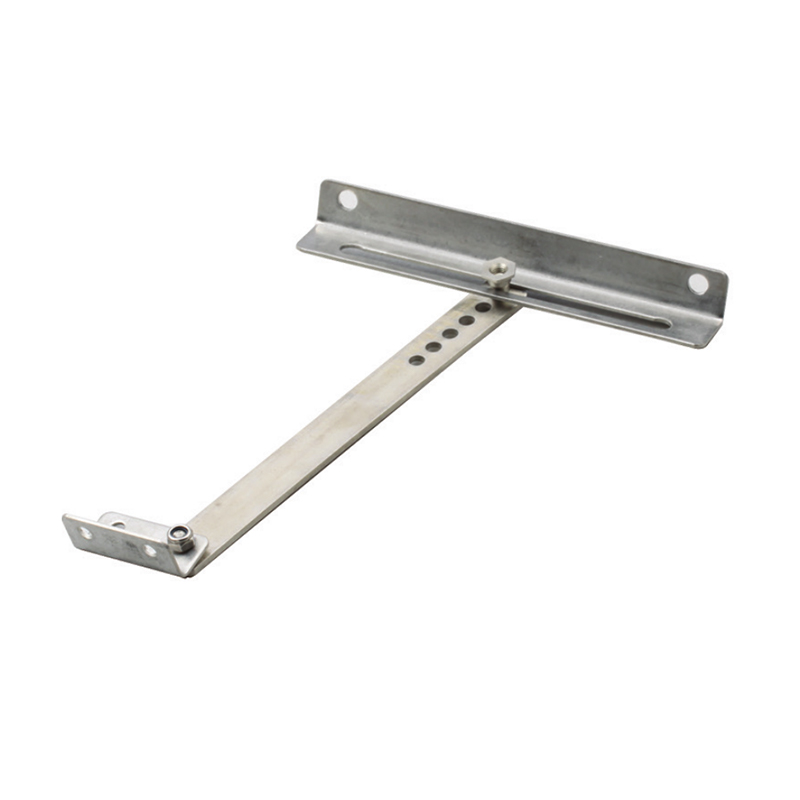

A collapsible table support is one of those deceptively simple mechanisms that quietly enables enormous flexibility in furniture design, event management, and space-saving storage. From the folding leg bracket beneath a catering table to the precision-engineered hinge on a wall-mounted drop-leaf desk, the quality and specification of the support hardware determines whether a folding table is a reliable asset or a persistent liability.
A collapsible table support is any hardware mechanism that allows a table's structural legs, frames, or surface extensions to be folded, pivoted, or retracted from their working position into a compact storage configuration. The term encompasses a wide range of products: folding leg brackets, trestle hinges, drop-leaf table knuckle joints, wall-mounted folding shelf supports, scissor-action leg frames, and the locking mechanisms that hold them securely in the open position during use.
The functional premise is straightforward — a table that can be folded flat occupies a fraction of its deployed footprint during storage and transport — but the engineering required to achieve this reliably, safely, and durably under repeated use cycles is considerably more involved. A collapsible table support must simultaneously act as a hinge (allowing the fold), a lock (preventing collapse under load), and a structural member (transmitting the table's working loads through its own body to the floor or mounting surface). Failures in any of these three functions create hazards ranging from minor instability to sudden structural collapse.
"The best folding table hardware is hardware you never think about — it deploys smoothly, locks positively, and holds solidly through years of use without demanding attention. That invisibility is the measure of good engineering."
Types of Collapsible Table Supports
The category spans several fundamentally different mechanism types, each suited to specific table configurations and use environments. Understanding the distinctions enables correct specification and avoids the common mistake of fitting a mechanism optimised for one application to a structurally incompatible table design.
| Type | Mechanism | Best Application | Typical Load |
|---|---|---|---|
| Folding Leg Bracket | Pivot and locking catch | Banquet / catering tables, market stalls | 50–200 kg (per pair) |
| Drop-Leaf Knuckle Joint | Hinged rule joint or butt hinge | Kitchen and dining drop-leaf tables | 20–80 kg |
| Scissor / X-Frame Support | Crossing pivot arms, spreader bar | Trestle tables, workbenches, outdoor tables | 80–300 kg |
| Wall-Mounted Folding Bracket | Hinged wall plate, folding arm | Murphy tables, fold-down desks, laundry counters | 30–120 kg |
| Locking Strut / Stay | Telescopic or hinged stay with lock | Side-flap support, worktop extensions | 20–60 kg |
| Telescopic Leg Assembly | Adjustable-height leg with fold-flat base | Height-adjustable portable tables, trade show | 40–150 kg |
Folding Leg Brackets
The folding leg bracket is the most widely used collapsible table support in commercial and event settings. It typically consists of a steel pivot assembly welded or bolted to the table underframe, with a separate leg or leg pair that swings through 90 degrees from the horizontal (storage) position to the vertical (working) position. A spring-loaded locking catch — or in heavier-duty versions, a manually operated slide latch — engages automatically when the leg reaches the fully open position, preventing accidental folding under load.
Bracket quality varies enormously across price points. The most significant differentiators are pivot pin diameter (heavier pins resist shear loads better), locking mechanism spring force (weak springs disengage under vibration), and surface treatment (powder-coated or galvanised steel brackets resist corrosion far better than paint-only finishes in damp or outdoor environments). For commercial catering applications where tables are folded and deployed hundreds of times per year, specifying heavy-duty steel brackets rated to at least 150 kg per pair is a minimum standard worth enforcing.
Drop-Leaf Knuckle Joints and Rule Joints
Drop-leaf tables rely on a different hinge philosophy: rather than folding a supporting leg, the leaf itself hinges downward when not in use, with a separate swing-out leg or bracket support that folds flush with the table apron when the leaf is lowered. The rule joint — a traditional woodworking joint paired with a back-flap hinge — creates a continuous curve at the junction between tabletop and leaf, preventing objects from catching on the gap and providing a degree of mutual support between the surfaces. Modern hardware versions of this joint use precision-cast knuckle hinges that replicate the rule joint's geometry in metal, suitable for both traditional and contemporary furniture styles.
Scissor and X-Frame Supports
Scissor-action table supports use two crossing arms pivoted at their intersection to create a stable, self-spreading base structure that collapses to a flat profile when the pivot is released. The geometry of the scissor mechanism means that the wider the base spreads, the lower the table height — a property exploited in low garden tables and coffee tables — while a taller, narrower configuration is used for workbench and catering trestle applications. The critical engineering challenge in scissor supports is the pivot joint itself: it must resist both the compression loads from the table surface and the outward spreading forces generated by the weight of the load. Rivet or bolt pivots with nylon washers are the minimum acceptable specification; cheap spot-weld pivots are a failure point that typically manifests as joint slop and rattle after relatively few use cycles.
Key Selection Criteria for Collapsible Table Supports
Always specify hardware rated to at least 1.5× the expected maximum working load. Include dynamic loads — people leaning on the surface, lateral forces from equipment use — not static weight alone.
Powder-coated steel for indoor use; hot-dip galvanised or stainless for outdoor and wet environments. Zinc alloy (zamak) is acceptable for light-duty indoor applications only.
Positive locking — a mechanism that requires deliberate action to release — is essential for any support bearing significant loads. Friction-only or gravity-dependent locks are not adequate for commercial use.
Commercial catering hardware should be rated to a minimum of 5,000 open/close cycles. Consumer-grade hardware is typically rated to 500–1,000 cycles — adequate for home use but not for events or hospitality.
Confirm the bracket's mounting hole pattern against the table frame or substrate dimensions before purchasing. Mismatched geometry requires custom drilling or bridging plates that add cost and compromise aesthetics.
For commercial furniture, look for hardware that contributes to compliance with EN 581 (outdoor), EN 1730 (indoor tables), or equivalent standards. Manufacturers should provide test data on request.
Understanding Load Ratings
Load ratings on collapsible table supports are frequently misread, leading to dangerous underspecification. A bracket labelled 100 kg typically refers to the static distributed load on a pair of brackets — not the safe working load for a single bracket, and not the capacity for concentrated or dynamic loads. Real-world table loads include people resting their full weight on a surface, equipment being slid across it, and lateral forces from machinery or tools. A safe conservative practice is to treat the stated rating as the absolute maximum and apply a safety factor of 1.5 to 2.0 — meaning a table expected to bear 100 kg in use should be fitted with hardware rated to at least 150–200 kg.
For wall-mounted folding brackets, the calculation must additionally account for the lever arm effect: a bracket projecting 600 mm from the wall with a load of 50 kg at the outer edge generates a moment of 30 Nm at the wall fixings. The wall structure itself — timber stud, masonry, or metal frame — must be assessed for its capacity to resist both tensile pull-out and shear loads at each fixing point. Hollow plasterboard walls require cavity fixings or noggin blocking; masonry walls require appropriate anchor bolts; timber frames require lag screws into studs, not into the sheathing alone.
Never rely on stated load ratings alone for critical installations. For wall-mounted folding supports in commercial environments — hotel bedroom Murphy tables, school fold-down desks, healthcare facility surfaces — commission a structural assessment of the wall fixing arrangement. Inadequate wall fixings are the most common failure mode in wall-mounted folding table installations, and the consequences of failure under load can be severe.
Materials: Steel, Aluminium, and Engineered Polymers
Steel
Steel remains the dominant material for collapsible table supports across all performance tiers, from entry-level folding leg brackets to heavy-duty event furniture hardware. Its combination of high strength, weldability, and relatively low cost is unmatched for structural applications. The principal variants in use are cold-rolled mild steel (used for brackets and frames in the 1.5–3 mm thickness range, suitable for most commercial applications), structural steel tube (used for folding leg frames and scissor-action assemblies in the 1.5–2 mm wall thickness range), and stainless steel (grades 304 and 316 for outdoor, marine, or food-preparation environments where corrosion resistance justifies the cost premium).
Surface treatment is critical for steel brackets used in event or commercial environments. Powder coating provides durable protection against mechanical abrasion and mild moisture exposure; hot-dip galvanising offers superior corrosion resistance for outdoor or wet-environment use, at the cost of a rougher surface finish that may not be acceptable in furniture-grade applications. Black oxide or phosphate finishes offer minimal corrosion protection and are suitable only for dry indoor environments.
Aluminium
Aluminium alloy collapsible table supports occupy a specific market niche where weight reduction is a priority — portable folding tables for outdoor recreation, trade show displays, and lightweight catering applications. Aluminium's density is approximately one-third of steel's, enabling significant weight savings in leg assemblies and scissor frames. The trade-offs are lower stiffness (aluminium deflects more under load than a comparable steel section), lower fatigue resistance in thin sections, and generally higher cost per kilogram. Die-cast aluminium brackets are common in consumer-grade folding table hardware, but the porosity inherent in die casting makes them inappropriate for high-cycle or high-load commercial applications where forged or extruded aluminium should be specified instead.
Zinc Alloy and Engineered Polymers
Zinc alloy (zamak) die castings are widely used for light-duty decorative brackets, hinge knuckles, and release catches in furniture-grade applications. Their excellent dimensional accuracy and smooth casting surface make them attractive for aesthetics-driven products — adjustable shelf brackets, decorative drop-leaf supports — but their brittleness under impact and susceptibility to creep under sustained load makes them unsuitable for structural table leg supports bearing significant working loads. Engineered polymers such as glass-reinforced nylon (PA66-GF) are increasingly used for pivot bushings, locking cams, and spacer components within steel hardware assemblies, where their low friction, corrosion resistance, and dimensional stability add value without compromising overall structural performance.
Applications Across Sectors
Event and Catering Industry
The event and catering sector is the largest commercial market for collapsible table supports, driven by the fundamental requirement to set up, use, and store large quantities of tables within tight time windows. A typical corporate event might require 50–200 six-foot folding tables to be deployed in under an hour and cleared in the same window at the end of the function. In this context, the folding mechanism is a tool, and its reliability, speed of operation, and robustness under repeated handling determine whether it supports or hinders the operation.
Industry-standard catering folding tables use U-leg or H-frame steel leg assemblies with heavy-duty folding leg brackets at each end of the frame. The gold standard in commercial event hardware — used by major hire companies and event venues worldwide — features 1.5 mm cold-rolled steel frames, swaged (tapered) leg profiles for nesting efficiency, and spring-loaded auto-lock catches that engage without manual adjustment when the legs are fully extended. These tables are designed to withstand the casual abuse of event environments: being wheeled on trolleys, stacked six or eight high, dropped from waist height, and used as step-ups by event staff loading decorations.
Residential and Home Office
The residential market for collapsible table supports has grown substantially in the context of smaller urban living spaces and the widespread adoption of home working. Wall-mounted fold-down desk supports — allowing a working surface to be deployed when needed and folded flat against the wall when not in use — represent one of the fastest-growing hardware categories in the home furniture sector. The critical performance requirements in this context differ from commercial event use: cycle frequency is lower, but aesthetics, finish quality, and the ability to support a monitor, keyboard, and ancillary equipment without vibration or deflection are paramount.
For fold-down home office desk applications, quadrant stays or locking gas struts are increasingly preferred over simple hinged brackets. Quadrant stays engage the folded surface at a precise angle and lock it rigidly in the horizontal position, while gas struts provide counterbalanced assistance with both opening and closing — preventing the surface from slamming down and reducing the physical effort required to operate the mechanism repeatedly. Both options require accurate specification: a gas strut with insufficient force will not hold the surface level under load; one with excessive force will be difficult to fold closed.
Retail, Market Trading, and Pop-Up Commerce
Market traders, craft fair exhibitors, and pop-up retail operators share a requirement for tables that assemble and disassemble quickly, fit in a van alongside stock, and withstand outdoor conditions reliably. The trestle table with scissor-action steel leg frame is the standard solution, valued for its stable wide base, acceptable height, and compact folded profile. For operators who set up multiple times per week, the quality of the scissor pivot and the positivity of the locking bar or spreader clip are the determining factors in how long the hardware remains usable without developing rattles, play, or failure.
Healthcare and Institutional Environments
In healthcare settings — hospital bedside tables, clinical examination surfaces, rehabilitation equipment — collapsible table supports must meet requirements that go beyond structural performance. Surface cleanability is a primary specification criterion: bracket mechanisms with exposed pivots, springs, and recesses trap pathogens and resist standard cleaning protocols. Increasingly, healthcare furniture specifiers prefer sealed or encapsulated hinge mechanisms that present smooth, uninterrupted external surfaces to cleaning procedures. Load ratings must account for patients leaning heavily on surfaces, and stability testing under EN 1730 or equivalent standards is typically mandatory for procurement.
Installation Best Practices
Folding Leg Bracket Installation on New Tables
When fitting folding leg brackets to a new table frame or replacement surface, the sequence of operations significantly affects the quality of the finished result. Begin by confirming the bracket mounting hole pattern against the table apron dimensions and marking hole centres precisely — misaligned brackets create uneven leg deployment and introduce stress concentrations at the fixing screws. Pre-drill pilot holes to the correct diameter for the specified fastener: under-size holes crack timber aprons; over-size holes allow the bracket to work loose under load cycling.
- Use the correct fastener type: Coach screws (lag screws) or machine bolts with barrel nuts are appropriate for timber aprons; self-tapping screws into steel hollow sections require the correct drill and tap specification to achieve full thread engagement.
- Set bracket alignment before tightening: With all fasteners finger-tight, deploy the leg fully, confirm it is square to the table surface and plumb to the floor, then tighten progressively. Tightening one fixing fully before setting alignment locks in any angular error.
- Test the lock under load before use: Apply a representative load to the surface with the legs deployed and attempt to fold them manually. A correctly set lock should not release under this test. If it does, adjust the catch position before the table enters service.
- Apply a thread-locking compound to structural fasteners: Vibration during use — particularly on event tables moved frequently — can gradually loosen fasteners. A medium-strength thread-locking compound applied to bolt threads prevents loosening without preventing future removal for maintenance.
Wall-Mounted Folding Bracket Installation
Wall-mounted folding table supports impose pulling forces on wall fixings that most domestic fasteners are not designed to resist. The installation sequence must begin with a wall structure assessment: locate and confirm the position of studs in timber-frame walls, or test masonry density and integrity in solid walls. Mark fixing positions to land on structural elements — never on hollow plasterboard between studs unless cavity expansion bolts rated to the required load are used.
Use a spirit level to confirm the wall plate is horizontal before drilling anchor holes — a bracket mounted even 2–3 mm out of level creates a visibly tilted surface and introduces uneven loading across the fixings. After mounting the wall plate, attach the folding arm and test the full range of motion before loading the surface. Check that the locking mechanism engages positively at the working angle and that the surface is stable under a representative load applied at its furthest point from the wall.
Maintenance interval recommendation: For commercial folding tables in active use, inspect all folding leg bracket catches, pivot pins, and locking springs at intervals of no more than 6 months. Lubricate pivot points with a light machine oil or dry PTFE spray to prevent wear acceleration. Replace any bracket showing cracked welds, bent pivot pins, or locking catches that no longer engage positively — the cost of replacement hardware is negligible compared to the liability consequences of a table collapse.
Advantages and Limitations of Collapsible Table Supports
- Dramatically reduces storage and transport footprint
- Enables flexible space use — one room, multiple configurations
- Lower cost than fixed-leg alternatives at equivalent surface area
- Widely available in standard sizes and mounting patterns
- Suitable for both permanent installation and temporary deployment
- Enables height adjustment in some scissor and telescopic designs
- Rapid deployment — most mechanisms open and lock in under 10 seconds
- Lower rigidity than fixed-leg frames of equivalent weight
- Locking mechanisms require regular inspection and maintenance
- Consumer-grade hardware unsuitable for sustained commercial use
- Wall-mounted versions require suitable structural wall substrate
- Moving parts accumulate wear — finite service life vs. fixed frames
- Mechanism gaps and recesses can trap debris in food environments
- High cycle use demands premium-rated hardware at higher initial cost
Buying Guide: What to Look for and What to Avoid
Specification Checklist
- Confirm the rated load and apply an appropriate safety factor — minimum 1.5× expected working load for commercial use, 2× for public-access furniture.
- Specify the material and surface finish appropriate to the environment — stainless or galvanised for outdoor or wet spaces, powder-coated mild steel for indoor commercial use.
- Verify the mounting hole pattern and fastener specification against the table frame or wall substrate before purchasing.
- Check cycle life rating against expected annual deployment frequency — a table deployed twice weekly accumulates over 100 cycles per year; commercial hardware should be rated to at least 5,000 cycles.
- Confirm locking mechanism type — auto-lock (spring-loaded) for ease of use in high-frequency deployment; manual positive lock for applications where accidental release is a greater concern than deployment speed.
- Request EN 1730 or EN 581 compliance data from the manufacturer for furniture destined for commercial, institutional, or public-access environments.
Common Purchasing Mistakes
The most frequent error in specifying collapsible table supports is selecting hardware on price without accounting for the total cost of ownership. Entry-level folding leg brackets cost 30–50% less than commercial-grade equivalents, but in high-cycle commercial environments they typically fail within 12–18 months of deployment — requiring complete hardware replacement across an entire table inventory. Commercial-grade brackets, by contrast, typically outlast the table surfaces they support.
A second common error is specifying hardware designed for one orientation in a different application — fitting drop-leaf knuckle joints to a leg-fold application, or using light-duty wall shelf brackets as substitutes for purpose-designed folding table brackets. Hardware is engineered for specific load paths and deployment geometries; using it outside its intended configuration introduces failure modes that the original design did not account for and the load rating does not cover.
Retrofit upgrade tip: If existing folding tables are showing worn or unreliable locking mechanisms, it is often possible to replace only the bracket hardware rather than the entire table. Most standard folding leg brackets use a 57 mm or 64 mm mounting hole pitch that is compatible across multiple manufacturers. Measure the existing bracket hole pattern before ordering replacements — a like-for-like hardware upgrade can extend the service life of a sound table frame by five or more years at a fraction of full replacement cost.
Sustainability and End-of-Life Considerations
Steel collapsible table supports have a strong sustainability profile relative to many hardware categories. Steel is the world's most-recycled material — virtually all steel brackets, frames, and hinges at end of life enter the steel scrap recycling stream with no sorting or preparation required. Specifying steel over zinc alloy or composite alternatives simplifies end-of-life material recovery and supports circular economy principles in furniture procurement.
The repairability of folding table hardware is also a meaningful sustainability factor. Tables with replaceable bracket hardware — rather than welded or riveted permanent assemblies — can have worn or damaged components replaced individually, significantly extending overall product service life and reducing the volume of furniture entering the waste stream. Specifying tables with standard, available replacement hardware at the procurement stage is a simple and effective way to reduce long-term replacement costs and environmental impact simultaneously.
Collapsible table supports are functional hardware that rewards serious specification. The difference between a table that folds reliably through thousands of deployment cycles and one that develops rattles, unsafe play, or sudden failure within months is determined almost entirely by the quality and suitability of the support mechanism — not the surface material, the aesthetic finish, or the brand name on the label. Applying the discipline of load calculation, material specification, cycle life assessment, and compliance verification to collapsible table support procurement transforms what appears to be a minor purchasing decision into a meaningful investment in operational reliability, user safety, and long-term value.
Whether the application is a catering company's table fleet, a home office fold-down desk, a market trader's display surface, or a hospital bedside table, the principles are consistent: specify hardware rated above your expected loads, match the material to the environment, confirm the locking mechanism is genuinely positive, and maintain the mechanism at regular intervals. Do these things, and the collapsible table support will be exactly what good hardware should be — completely invisible in use, and entirely reliable when it matters.